115. André Sa: Success Is A Decision
André Sá left Portugal with no roadmap and no one to follow. Through hard work, dedication, and a quiet pride in where he comes from, he built one of the more remarkable coaching careers in European volleyball. This season at Mulhouse (France), it all came together.
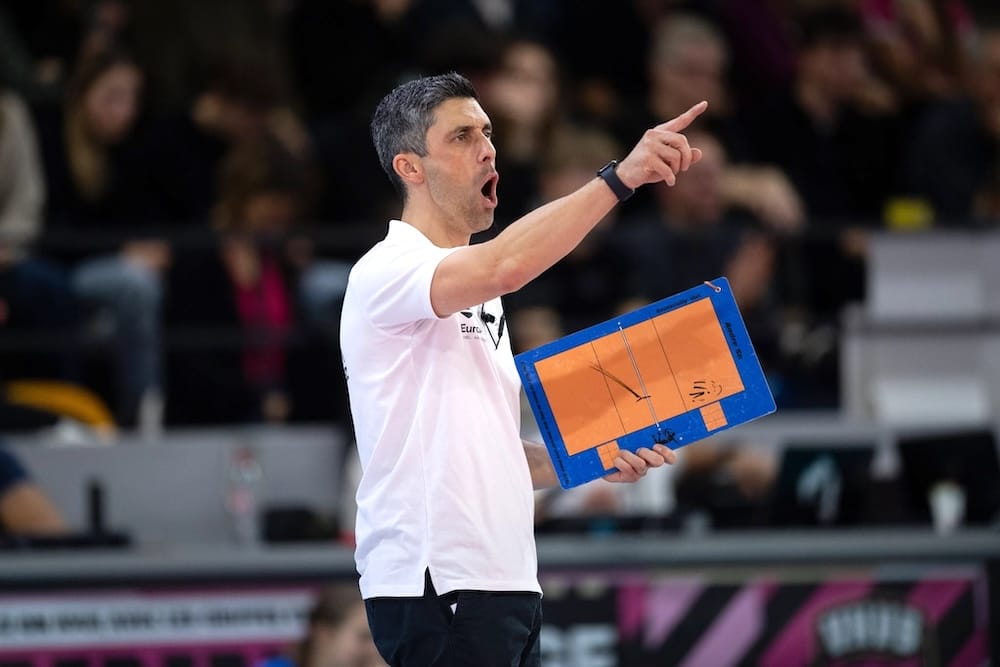
André Sa is not the kind of coach who arrives at a big club after one lucky season. He built his way up through Portugal, Norway, the French second division, and Vandoeuvre-Nancy, before taking over as head coach of Volley Mulhouse Alsace in 2025.
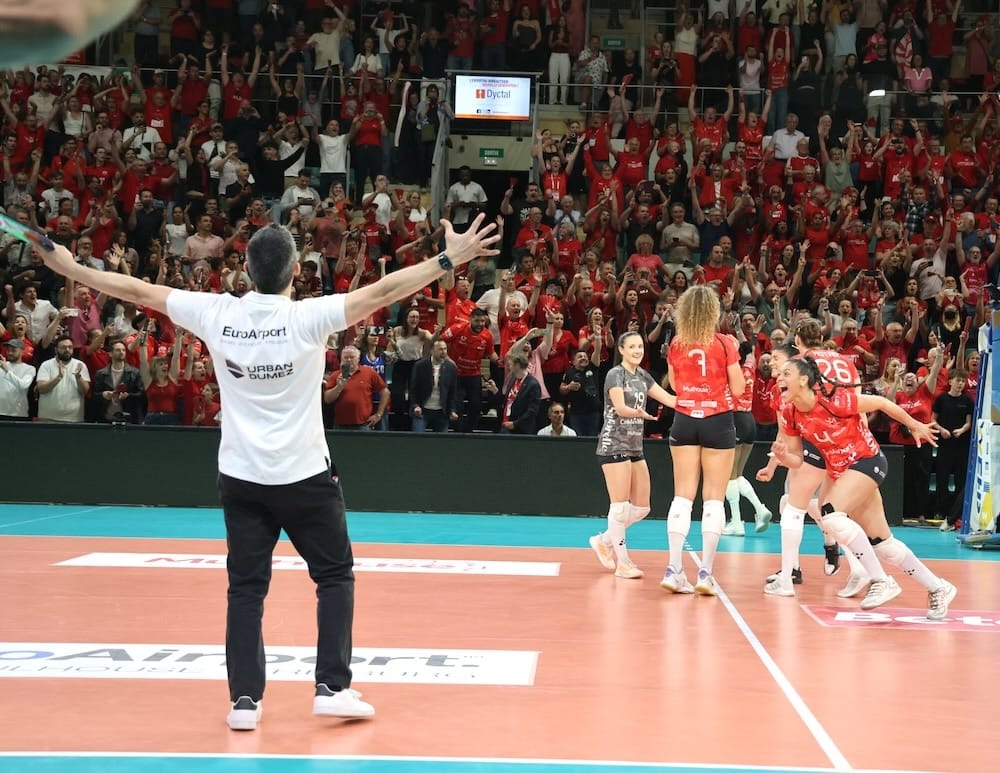
Volley Mulhouse Alsace is one of the most storied clubs in French volleyball and a consistent presence in top European competitions. In his very first season in Mulhouse, he won the treble: the Supercup, the Cup of France, and on May 1st 2026, in front of a sold-out crowd, the French national championship.
It was a goal he had spoken out loud to his wife ten years earlier, when he was coaching in the second division in Istres, watching Mulhouse from the stands and thinking: one day I want to be the coach of that club.
Key takeaways from this article include:
- Why success starts with one decision, and how he made it in 2008
- How he aligns expectations with players before they sign
- Why he asks every player the same three questions before making an offer
- How he structures game preparation in three fixed moments
- Why agents remain the biggest unsolved challenge in volleyball
- The five building blocks of every great player, according to coach André
- Why you don't need to understand volleyball to fall in love with it
- What "more yes, less but" actually looks like inside a team
We have 50+ minutes of edited Masterclass for you, divided over 19 video clips.
Let's get into it. Enjoy!
Matias: The first big question for me is always about the mental switch. The moment you decided: okay, I want to become a professional coach. Do you still remember when that was? Where you were, what time period it was, and why you made that decision?
André: I remember it very well. It was exactly the moment I finished my diploma at university, as a sports teacher. In Portugal, when you finish your studies, you don't get a job immediately. You have to wait, sometimes three or four years, before you get a position in a school. And often it's far from your home.
But that was never my goal. To spend 30 years in one school, doing the same thing. I did those studies to learn more about sport. When I finished, I said to my wife, we weren't married yet, she was my girlfriend at the time, I said to her: I'm going to take a bet. For the next five years, I want to be a professional coach. If it doesn't work, I'll do what the others do. I'll go back to school, teach during the day, work at a club in the evenings. But I'm going to take the risk.
Looking back now, with more life experience and maturity, that was a decision that was not crazy, but a little out of the box.
Because I had no example in front of me. No coach in Portugal had made it that way. Everyone had a school salary for security and worked at clubs on the side.
This was around 2008. And now, nearly 20 years later, I'm still a professional coach. So it turned out to be a good decision. It wasn't easy, there were a lot of doubts along the way. But I don't regret that decision for a second.
Matias: If you could rewind to those first years of coaching, knowing what you know now, what advice would you give your younger self?
André: We don't control as much as we think we do. When I started, I was 27, and I didn't have enough maturity to understand that. I wanted to do much more than the players were able to do, or willing to do. I started with men, and now I'm with women, but the feeling was the same. I kept thinking: I will change their mentality. I will change this. I will change that.
So the big advice is: we don't control as much as we think we do, or as much as we think we will. Take it easy.
Prepare well, absolutely. Explain your ideas clearly. Make sure the players and the team buy into what you're doing, and use them to help you along the way.
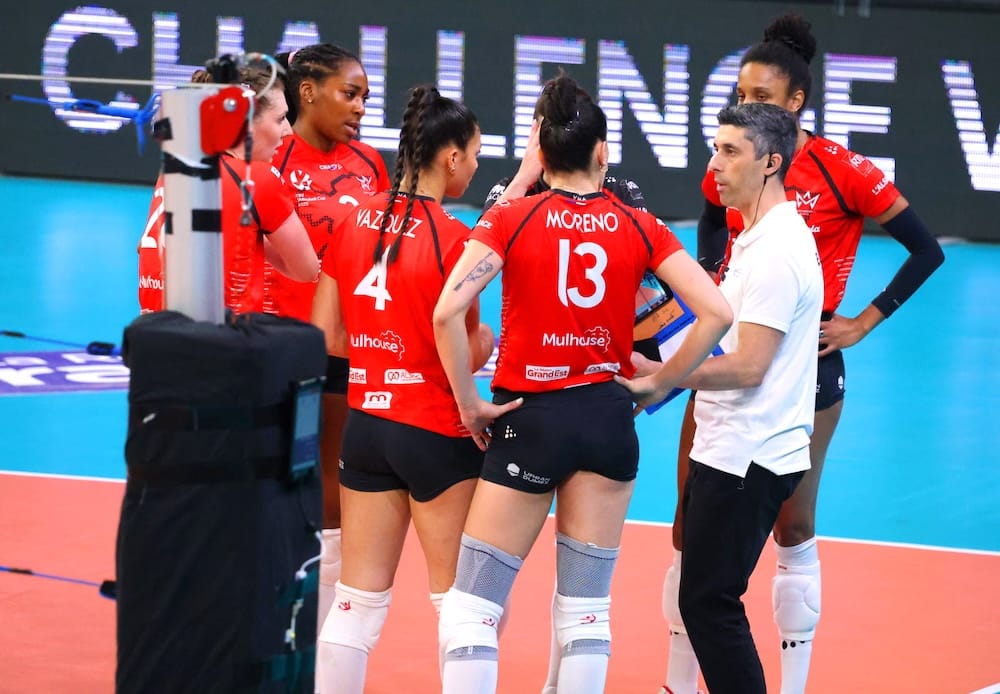
When I was young, I didn't want to ask my players for their opinions, because in my head that meant showing weakness. And that's not the right way. You don't have to ask everyone, but sometimes you just say: hey, help me here. I'm thinking about doing this. You have a bit more experience than me in this. What do you think, honestly?
The biggest advice I can give any coach is this: you don't control everything. And that is completely normal.
Matias: What are things you still hear today that make you think: we should have figured this out already. Why are we still talking about this? It can be cultural, technical, about clubs, management, agents, anything.
André: One thing that keeps coming up, and we're feeling it more and more in volleyball right now, is the impact of agents. Because over the years there has been a constant fight, a real ongoing tension, between agents, coaches, clubs, and players. And we should be working together for the development of the player.
We have already lost a lot of players. Players who could have had amazing careers, because of mistakes, because of ego fights between clubs, between coaches and agents, because an agent wanted to use a player to get into a certain club or market. And in the end, who loses? Volleyball loses. Because that player gives up, or never reaches the level they should have reached.
We have been talking about this for years and years. Everyone says yes, everyone says no. Some agree on certain points, not on others. But nothing changes. Nothing changes. And if I'm not wrong, we now have ten times more agents than we did ten years ago. Because the market has changed. More players, more agents, and no longer just one or two agents with a clear overview.
But the problem is still the same.
If I could change one thing, it would be this: players, make sure your agent is working for what you want to achieve. Not the other way around. I say this to all my players who are thinking about changing agents or are unsure how to work with one.
The agent is there to give you a service. You are not a product of your agent.
You are not something that belongs to your agent.
There are a lot of young players who start working with agents without understanding this. And as a sport, with all the smart people volleyball has, we should be much better at this. We should understand the role of each agent, in what way they can genuinely help coaches and clubs raise the level of the game.
If I could say one thing that I believe has the biggest impact on our sport globally, it is this.
Matias: The next question is about goals and goal setting. It's a personal one. Like we talked about before we started recording, you and your family made a decision together: let's commit to this, let's travel, let's live in different countries. So what is your own goal in coaching? Not the obvious answer, winning the championship with Mulhouse, but your personal goal as a coach.
André: On the material side, when it comes to titles and trophies, I want to share something. When I came to France, ten years ago, in 2016, I said to my wife: I want to be champion in France. I will be champion in France. I want to win the cup. I will win it here. Ten years ago.
And the curious thing is that at that moment, I was coaching in the second division, in Istres, in the south of France. The first division club closest to us was Venelles. I used to go and watch their games because they played at home on Fridays, which meant I could drive there. It was about 45 minutes away.
I remember watching one game, Venelles against Mulhouse. The coach was Magali. Venelles won 3-2. But watching Mulhouse, I thought: I love this team. They play really well. After the game, I walked across the court and I wanted to talk to Magali. Say bravo, you know.
People who know Magali know that after a defeat, no one can talk to her. But I said, I'll take the chance. She doesn't know me, let's go. She looked at me like, who is this guy? I don't think she even caught my name. I just said: hey, bravo for your team. I really believe you will be champion with this team. The spirit is there. And in the end, she was champion.
But that evening, I drove home and I said to my wife: I told you I wanted to be champion. I will be champion in Mulhouse. I will be the coach of Mulhouse. And that was ten years ago. The only person who can confirm this is my wife. But that is the true story.
So the goals I set when I arrived in France, I achieved them this season. I'm not saying I don't want to be champion a second or third time. But over these ten years, I also set another goal: I want to win a European competition as a coach. Not necessarily the Champions League, but a European competition. And I want to bring that to a club in France. So if you ask me right now what I am really focused on, it is that.
That doesn't mean the national league becomes less important to me. Of course I want to win that too. But this is my extra motivation.
And then the second thing, as a coach in the broader sense: my biggest goal is that my colleagues respect me. Just that. That they can look at me and say, I like this guy or I don't, but either way, I respect him. That is also what I am working towards.
Matias: You talked about wanting to be in a relationship of genuine respect with your coaching peers. That connects to what I wanted to ask next. Do you have coaches from other sports, or leaders from other fields, who inspire you? Not to copy them, not to become them, but people where you think: this way of working, this way of being, is something I want to develop in myself.
André: It is easier to feel inspired by coaches from volleyball, because the connection is more direct. But I want to be honest: I didn't get inspired by these coaches because of how they train or how they run a session. I'm not beside them every day. I don't see how they work.
