114. Giovanni Guidetti: I don't want to be in the photo. I want to be the photographer.
We sat down with Giovanni Guidetti over a coffee, fresh off his seventh Champions League title with Vakifbank, and already settled in Canada. On culture, staff, belief, and why surrounding yourself with people better than you is not a risk.
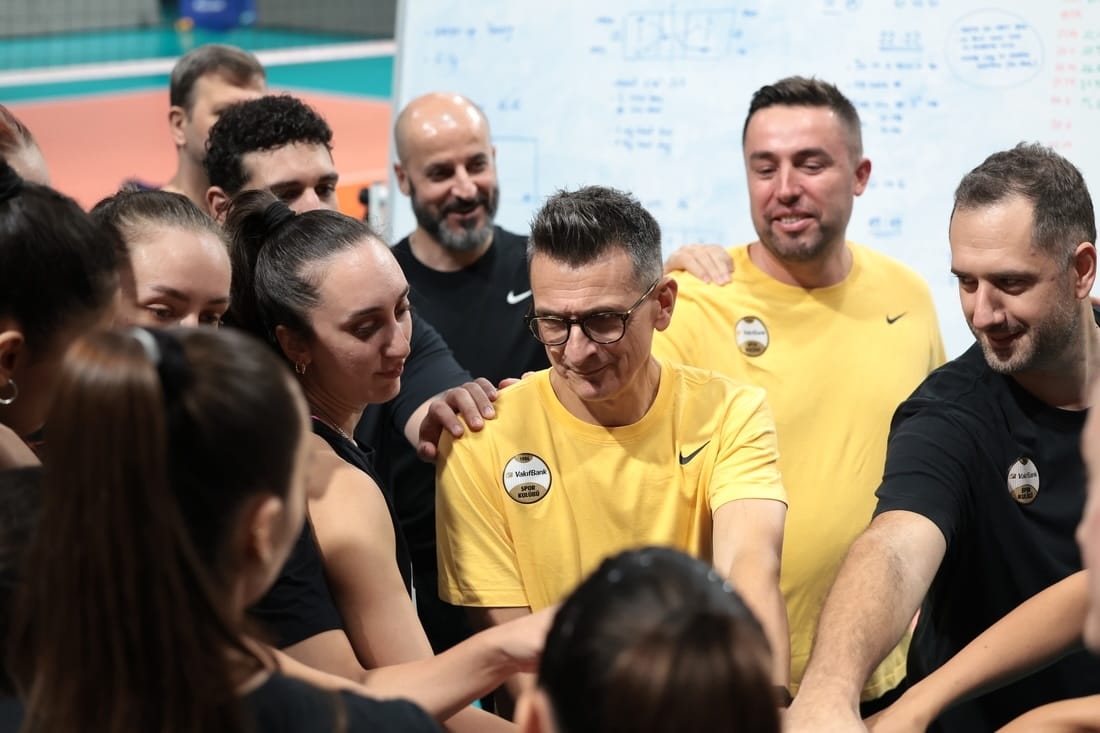
Two weeks after lifting his seventh Champions League trophy with Vakifbank Istanbul, Giovanni Guidetti was already in Canada, where he enters his second season as head coach of the national women's team with the 2028 Los Angeles Olympics in their sights.
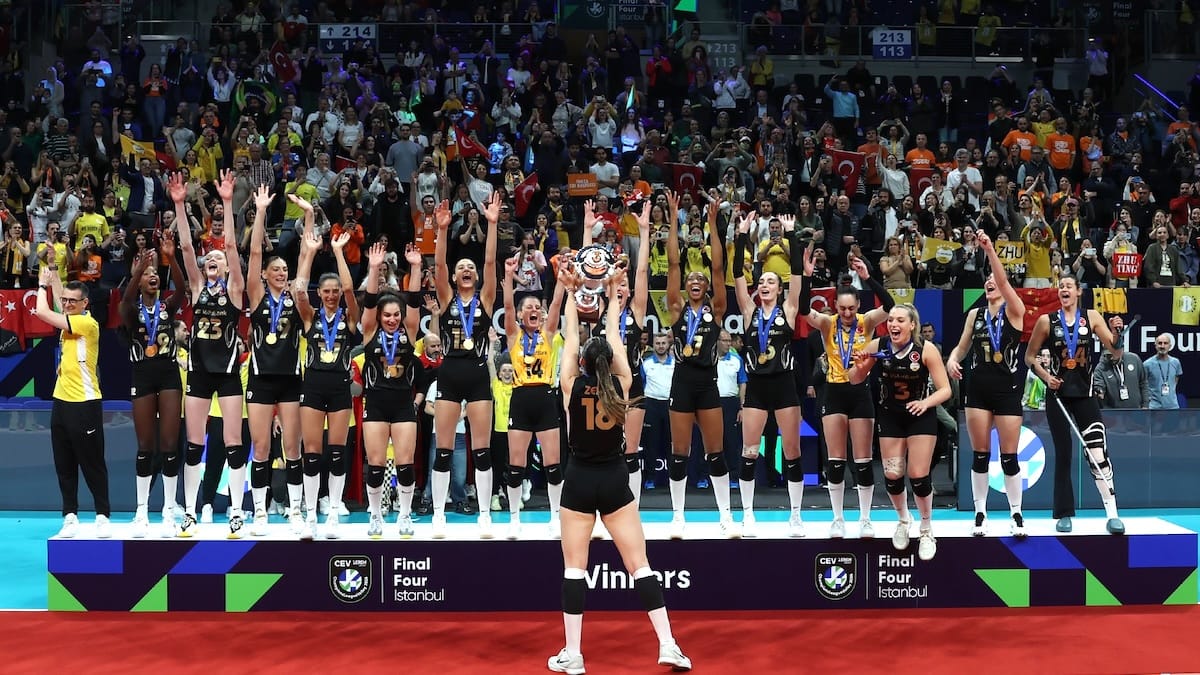
Giovanni Guidetti is the most decorated coach in the history of women's professional volleyball. Since joining Vakifbank in 2008, he has turned the Istanbul club into the most dominant force the sport has ever seen: seven CEV Champions League titles, four FIVB Club World Championships, a Guinness World Record of 73 consecutive wins across all competitions, and a 2026 season that ended in a historic treble.
He has coached six national teams, appeared at four Olympic Games, and is only getting started in Canada.
Key takeaways from this article include:
- How coach Guidetti defines culture as a non-negotiable standard, and why talent alone never overrides it
- Why training volume is a vanity metric, and what he measures instead
- The "Starbucks rule": how great organizations preserve their identity while constantly renewing themselves
- Why elite leadership is less about expertise and more about who you put around you
- How some of his coaching hires came from a single lunch
- What is actually happening in a coach's mind at 22-18 in the third set
- Why protecting your non-working time is not a luxury. It is part of the job.
- Why surrounding yourself with people better than you is not a risk. It is the strategy.
Coach Guidetti's coaching tree: Giovanni's Vakifbank staff has been home to some remarkable coaching minds, several of whom have sat down with VolleyBrains: Vanny Miale, Cesar Hernandez, Sanja Tomasevic, and Jamie Morrison. Their masterclasses, practice breakdowns, and deep dives are linked throughout this piece.
Now, let's get into the interview with Giovanni.
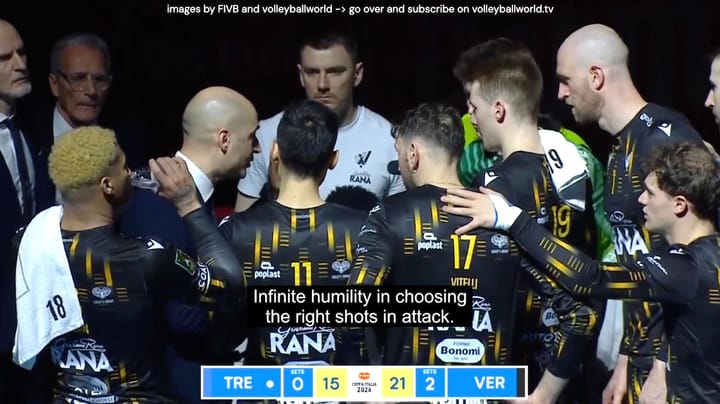
Matias: 22-18 down, 2-0 in the third set of the Champions League semi final game against Conegliano. How much at this moment is still tactical advice, and how much is emotional, or about focus, or group dynamic? What is going on at that moment?
Giovanni: I think it's a little bit a combination of everything you said. If somebody could track the brain of the coach in a moment like this, it would be like — I don't know — that image of a California highway, or a Japanese highway, with a million crossroads, where everything is coming at you at once, and the opposite of everything too. You're thinking about what to say in the press conference if you lose. At the same time, you're thinking about what to do to win. At the same time, you're trying to give advice to your players. And at the same time, you're thinking about what happens if we lose.
I would like to say I'm just focused on the next point. I mean, of course I'm focused on the next point, but what's going on in the brain of the coach there is very, very confusing.
In that moment, it was just about believing that if you keep doing your job correctly, and they give you one chance, then something like a miracle can happen. And we know sport. You know sport. I know sport. We've seen millions of moments like this. I've lost matches where I was up 14-11 in a tiebreak. I've won matches where I was down 2-0, 18-10.
So we can talk about this forever.
At Vakifbank, we really like a comeback. It's inside our DNA. I can't even tell you how many golden sets we won when everybody was already leaving the gym because it was done, because nobody believed in us anymore. So we know that in moments like this, having experienced these kinds of miracles before gives you hope.
We knew that if we kept going, doing our job, and they gave us the chance, because that's always the key part, then if you take it, you can change everything.
And that's what happened. For example, we didn't change our tactics in that moment. We kept what we were doing, and then the block came. In that key moment, the block came. Not because we changed everything. No, we kept doing what we were doing, and the block came.
And the setter was pretty good in that moment, understanding which players had the eyes to kill the ball. And me, on my side, I'm just what I call a very lucky spectator with a front-row seat. I can't do much more. I'm just the closest person to the players, just keep encouraging.
I think the key thing, for us as a staff and as players in that moment, is that we didn't change our face. We didn't change our belief. We didn't change our trust, point after point after point.
Honestly, if a match like this happens in a qualification group, you know it's 2-0, 22-18, and you know you can recover in a quarterfinal or another match. Then it's done. But honestly, nine teams out of ten, against Conegliano, 2-0, 22-18? Done. The players already stop believing.
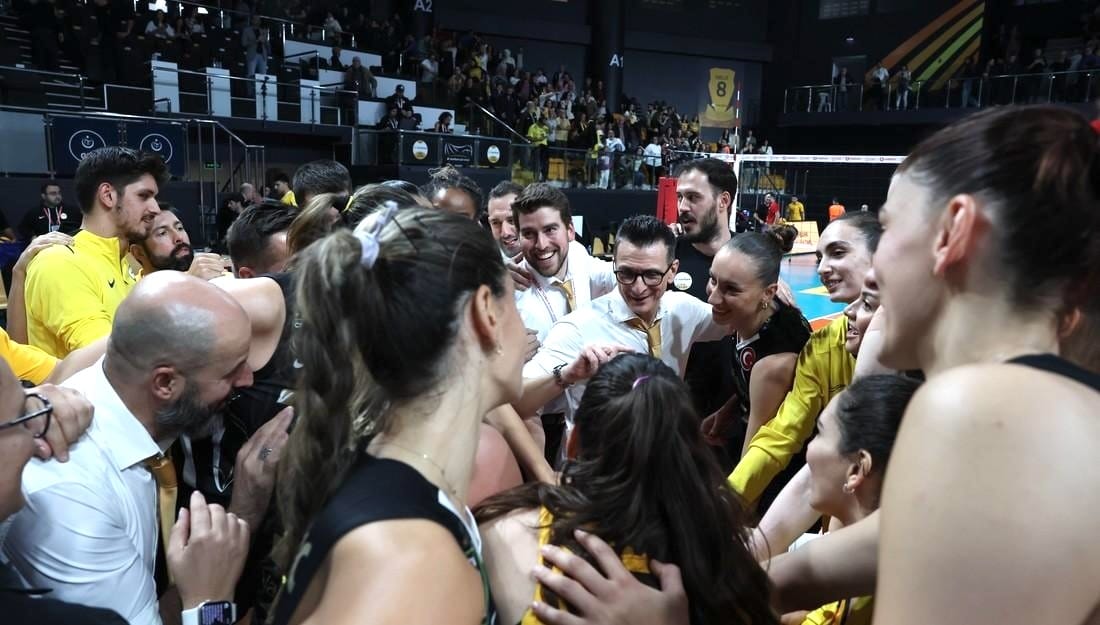
I was really lucky that my players didn't care that Conegliano was on the other side of the net. They didn't stop believing. They didn't stop fighting. And again, our setter was very good in that moment, understanding which players wanted to kill the ball. And then of course, in that moment, Boskovic was on fire, and Marina Markova followed very well. We got those couple of defensive plays we needed.
And in that same moment, Conegliano started thinking, "What's going on? They're not giving up." And then the opposite happened to Conegliano.
This is the beauty of sport. One time it happens to us, one time it happens to the other.
Like you say, it's a cliché, but the only thing that counts is to keep believing, always, because there is always a chance.
I think in that moment we wrote another great page of sports history. And another time, it will be another team against us that writes a great page of sports history. That's what makes sport very, very special. There is no end until the referee blows the whistle. There is no end to any match. And that's what makes it so fun to watch.
Matias: What are the things you've really internalized for yourself as a coach, within the microcosm you've created at Vakifbank? The things where you feel: these I have to keep doing at the highest level, because I know that's what makes us competitive. And on the other side, what are things that, over the last 15, 10, five years, you've let go, because you understood they weren't that important?
Giovanni: That's not an easy question. 😀
Matias: I thought about these things before we started recording. 😄
Giovanni: The first one, for sure, is culture. We cannot escape it, change it too much, or step away from what our culture is. It's so, so important for us.
In the staff, with the players, it's very clear: if we don't keep high standards in our culture, we're not going to succeed.
We're not going to be happy with what we do every day. And it's wide, because it's in everything. It's in the attention each one of us puts into their job.
We play against the last team in the league, we play against Conegliano. The standard of work is the same. The standard of preparation is the same. The weight room everything. Even the way we take care of our fitness room. If you ever talk to our athletic trainer, you'll understand: that fitness room is like a temple. Everything has to be in order, everything has to be precise.
 VolleyBrains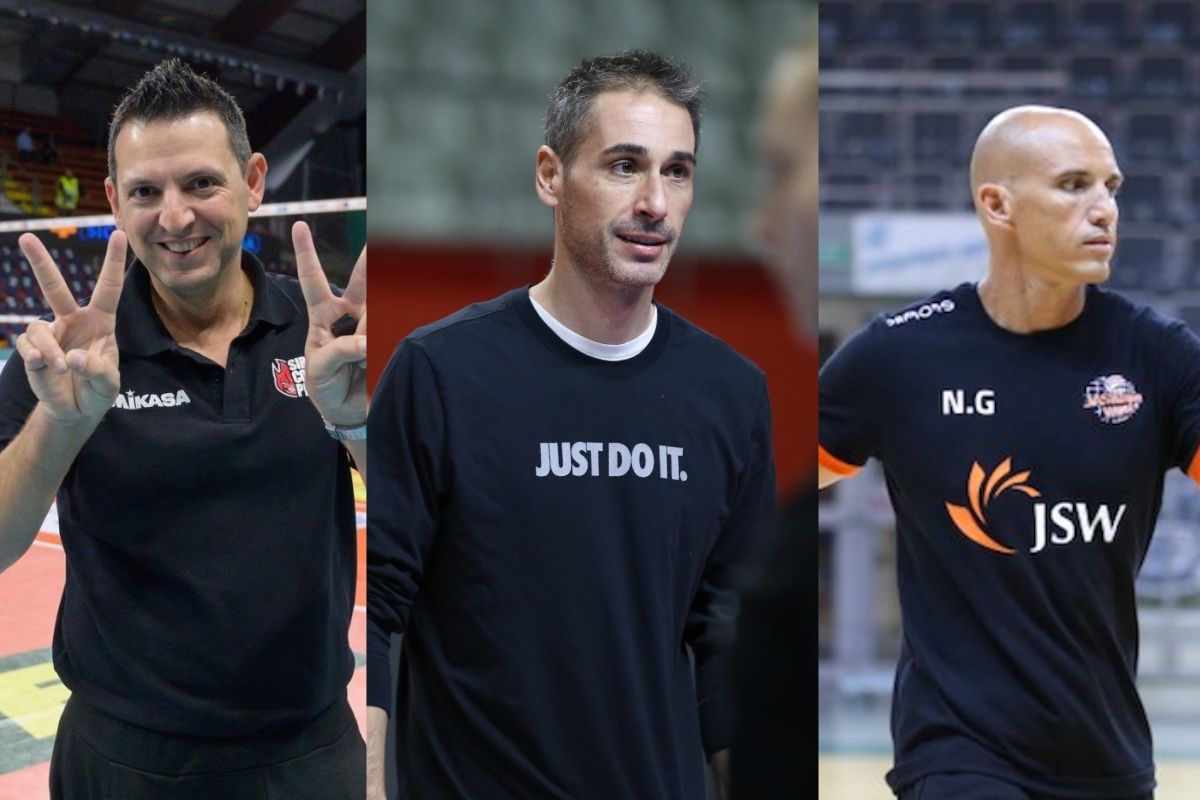
That's where we're building a lot of our success. Same with our medical room. We have three people there, one from Spain, one from Turkey who has been with us since 2020, and another. It's another very important room in our environment.
And then there's our work on the court. The players spend twice a week training with virtual reality, just to gain maybe 0.001 in decision-making speed, arm speed, or a little more understanding. Will we win because of that? We don't know. But if we try to be even 0.001 faster, maybe it helps.
Every two or three years, I also try to bring in new coaches who give me and the players something fresh. Take my setters, Cansu and Sıla. I spent more time with Cansu, but I also spent a lot of time with Sıla. Cansu was preparing matches with me, working with me, listening to me for at least eight years.
So the question becomes: what more can I give her?
This year, I decided she needed someone just for her. We invented a role that probably didn't exist before at Vakifbank: the setter coach.
I brought in an amazing guy, you probably played against him, TJ Sander. He was an incredible setter who had to stop very young because of physical problems. He also runs his own academies and does amazing work there. For him it was the first time in this kind of role, but he was the main voice with Cansu. I still communicate, I still have Cansu in my gym every day, but he was the one leading those conversations.
Then I also brought in another coach from Serbia.
So the staff keeps the same culture, but we add something new, little by little, every season.
I always like to give each season a title. I can't remember what this season's title was, but I remember one season we said: we want a new house, but the foundations stay the same.
There's a quote on the wall in our locker room, where the players change their shoes and look up: "Your talent brought you here. Your behavior will decide if you stay." The focus is on how the players work every day, how we as a staff work every day, how we try to be good every day. That's very key for us.
Unfortunately, sometimes we have to say goodbye to good players, even great players, because they don't fit fully into our culture. We don't care if they score 30 points a match or have 80% reception. If we don't see them matching our culture, we can't work together. And I want to be clear: I'm not saying those players are bad. They're amazing players who just don't match our culture. They can win elsewhere, they'll be successful. No problem. We're just trying to find players who match what we are.
Now, your other question, what I'm doing less compared to maybe 10 years ago: there's been a lot of work on myself. Year by year, I always try to get some outside help. This year, for example, I collaborated all season with a sports performance expert, kind of sports psychology, an Australian guy I was really lucky to meet. I actually found him through a podcast, reached out, had him give a talk to the team last year, and it was so fascinating that I kept working with him. I've had others before too.
I can tell you for sure: I'm trying to be less emotional, less angry. Less emotional, maybe not entirely, I can't lose my emotion. But at least a little more calm, a little less angry. If you saw me 10 years ago, I was breaking a volleyball board every match. I learned that probably wasn't helping the team. So I've worked on that.
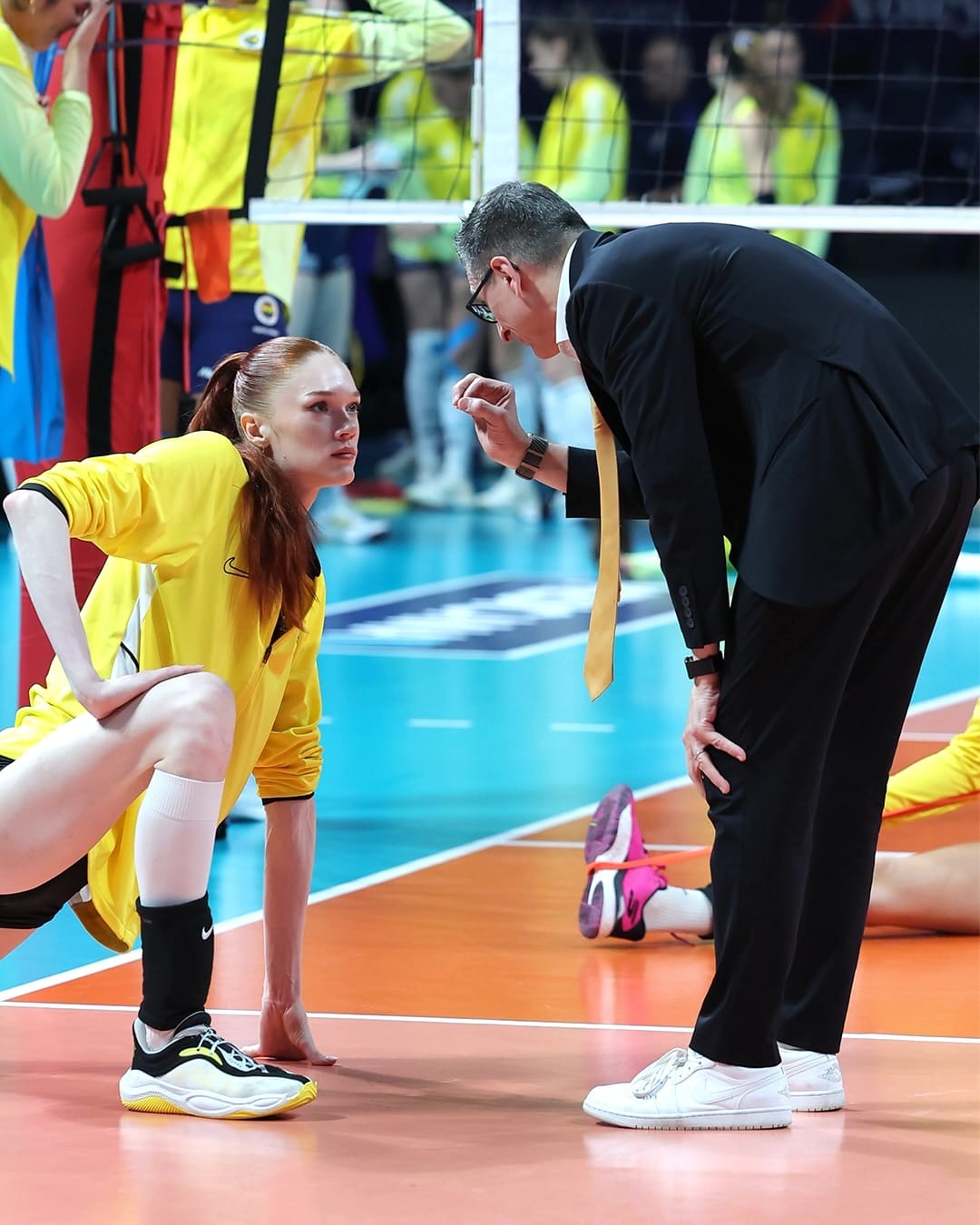
And if I look at how we trained 10 years ago versus now, I can tell you we've learned to be more efficient.
That means working better, not always more.
Before, it was: we need to work more than everyone else, six, seven hours a day in the gym. And we were successful doing that, I won't deny it. But now we don't do that anymore. We went from two sessions a day to one session, three to four hours, maybe five hours total including therapy. But it was a step forward.