116. Kelly Sheffield: Winning the Right Way
How do you keep a program grounded when NIL, the transfer portal, and five-year eligibility have rewritten every rule? Kelly Sheffield, the coach behind Wisconsin's rise to a national powerhouse, on winning without losing who you are.
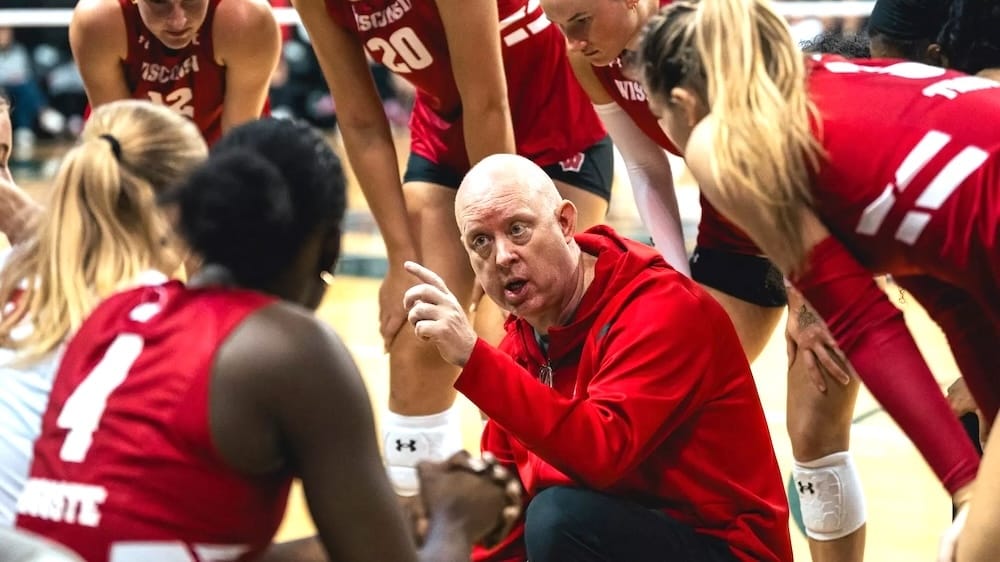
We first spoke with Kelly Sheffield in July 2021, when Wisconsin was knocking on the door of a national title. A few months later, the Badgers won it all. A lot has changed since then, in his program and in the sport itself.
Coach Sheffield is one of the most respected minds in American college volleyball. Since taking over in Madison in 2013, he has built the University of Wisconsin Badgers into a perennial national contender: that 2021 NCAA championship, multiple Big Ten titles, a string of Final Fours, and a fan base that makes the UW Field House one of the best environments in the sport.
But this conversation is less about trophies and more about how you keep a program grounded while everything around it shifts. NIL, the transfer portal, five-year eligibility, and the arrival of professional leagues on American soil have rewritten the rules of college coaching. Kelly talks about how he navigates it all without losing what makes his program his own.
Key takeaways from this article include:
- How the transfer portal and five-year eligibility have changed roster building
- Why a college program now needs a general manager
- How film study and game prep have evolved over the last few years
- How DISC profiles help him coach each player differently
- Why conflict kept above the table makes teams stronger
- Why he develops leaders across the whole roster, not just captains
- The books currently shaping his approach to leadership
Our 70-minute conversation was divided into 13 video clips.
Let's get into it. Enjoy!
Matias: We've just been talking a little bit about the kinds of volleyball college programs that exist. From my point of view, there are maybe three different kinds. You have a program that just doesn't participate in NIL, the transfer portal, all the gooey stuff that's been added over the last few years. That's one route.
Or you fully commercialize everything, and you just try to win. That's another route.
Or you have the hybrid game, which can be anything in between. Knowing you, from interviews, podcasts, our own interview a few years ago, I'd say you're choosing the hybrid way. So if that's true, what does being hybrid actually mean for you?
Kelly: Yeah, we're constantly trying to figure out what this landscape is. Here, volleyball is really important. We play in the UW Field House, and every match has over seven thousand fans. And we move across campus and play a few matches in the Kohl Center, which is our basketball arena. There, we'll play in front of sixteen or seventeen thousand.
So it's important to the community, it's important to the athletic department. Winning is certainly important. The finances of it are pretty important to our athletic department and our university. So yeah, there is an expectation of winning.
But yet this isn't pro, this is college. And to me, one of the more enjoyable parts of what I get to do is developing people.
That's a big goal, an important goal, that we're learning life skills and we're teaching them. There's a lot of teaching at the college level, as there should be. So there's this balance where winning is important, and competing, but it isn't the only thing.
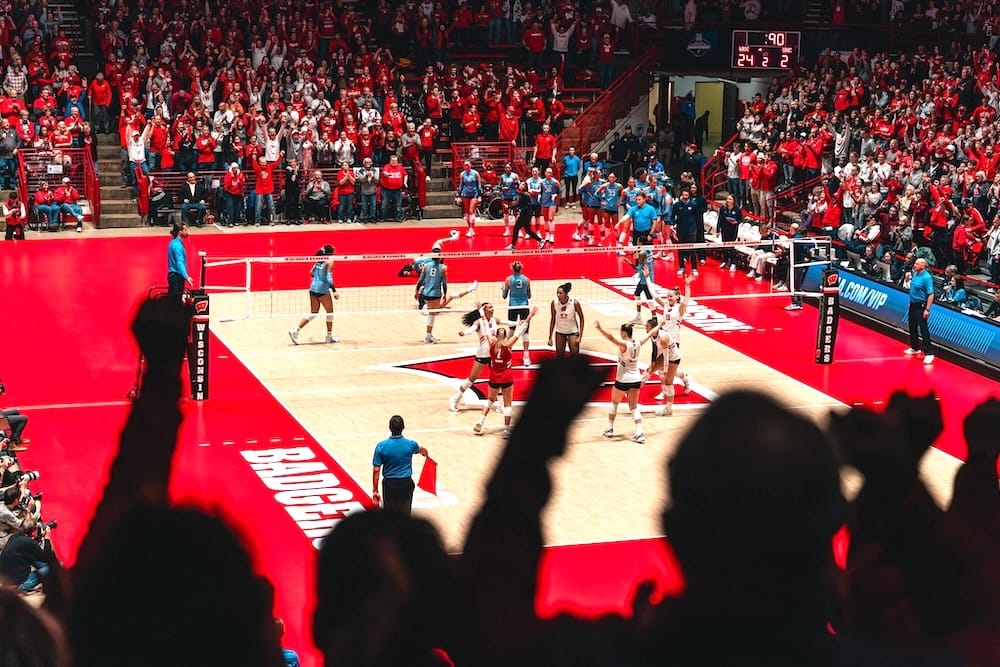
And you continue to develop people, but now you've got transfers. Five years ago, ten years ago, you could pretty much expect that somebody was going to be in your program for four years. Transferring happened occasionally, but not a lot.
Certainly we couldn't pay players. Heck, we couldn't even give them a bagel spread, that for some reason was illegal. They had a lot of these silly rules, and now we've gone the exact opposite direction. Now you have players coming in and out of programs all the time, and we can pay them, in some cases very, very significantly. There are certainly some programs that have the resources to pay these players better, in many cases, than about any pro team can.
So how do you balance all that? How do you balance high school recruiting Because right now, high school kids in the US commit two years before they get to campus. And then there's the influx of international recruits coming into these programs. It's opened up the floodgates for a lot of players overseas to come here and not only play volleyball, but get their education paid for as well.
I think that's one of the strengths of the US system, that you don't have to pick or choose between an academic route or a sport route. Both can be combined. You can get the schooling paid for and make a really healthy living while doing it. So managing that is something we talk about a lot as a staff.
Matias: Also the choices you have to make, what are you willing to leave on the table? Are you committing to a path while staying genuine to what you're doing?Like we said, hybrid can mean a lot of things.
Kelly: It can. I still find a lot of enjoyment in developing players. I think we've had quite a few players come here, whether it's one year, Mimi Colyer was here for one year, but I thought she really got a lot better that one year.
Or whether it's somebody who was here for five years, like Dana Rettke, I thought she did a great job of developing. Or Sarah Franklin, who was here for three years.
So whether they're here for one year like Mimi Colyer, three like Sarah Franklin, or five like Dana Rettke, we still have a responsibility of not just putting a team together, but helping them with their dreams and their goals.
Developing them as humans, as young ladies, and developing them as athletes who are hopefully getting closer to reaching their potential.
The length of time is just a lot different now. And we're about ready to pass a rule, I think within the NCAA sometime this month, that every player will get five years to play. That changes the equation, right? Is somebody going to be here for four years? Are they going to be here for five? Are they going to be here for their undergraduate degree, or are they going to try to get their master's degree too? So the ability to pivot is really, really critical.
And you try not to get into the mindset that I think we're in with basketball. I think basketball here in the States, it's more year by year, putting a team together. You'll see some of these basketball programs where the entire team leaves, everybody leaves, and it's about getting a whole new team right then. Our sport isn't in that space. There's a lot more transferring than there used to be, but almost nobody's replacing an entire team.
It's usually a couple of players graduating, maybe one or two transferring, and you bring in a few more. So there's always a balance between developing kids who maybe aren't going to be ready for two or three years, and bringing in others who are ready to go right now.
Matias: With all that change, would you say the level of play has actually gone up?
Kelly: Although there's a lot of change, I don't think our game, at least here at the college level, I don't think it's ever been played at a higher level than it is now.
I think part of it is better investment. I think part of it is also that kids aren't just going to schools in their local area anymore. With so many volleyball matches on TV and streaming platforms, people are getting outside their little bubbles. I think a lot of international players have come over here, and that's elevated the game and the college experience.
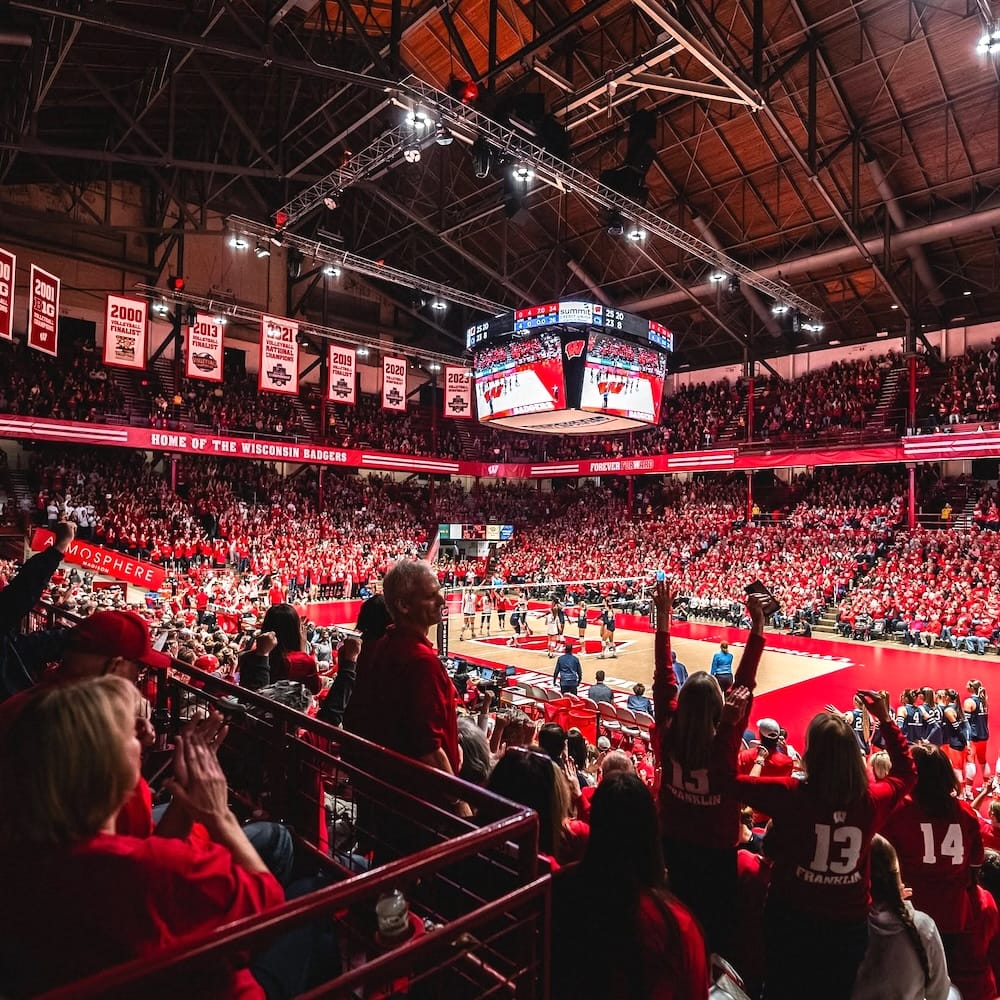
And then something like VolleyMetrics has done an amazing job. I mean, the fact that I can sit here on my computer and watch just about any match in the world being played.
As a program, as a coaching staff, we watch a ton of professional and international volleyball and have discussions about it. And the game has never been better here in college.
Matias: What competitions or teams do you and your coaching staff enjoy watching, where there's not just enjoyment and learning, but also something you can actually implement with your own team? Some kind of tempo, some kind of setting, whatever it might be. So what leagues, maybe what players in particular are you watching? Or is it all over the place?
Kelly: Number one, the videos you're putting out of practices, and coaches talking through some things, I really, really enjoy that. (thank you, Kelly 😉)
Fortunately, over the last ten years or so, we've had quite a few players go over and play for some of the top teams in Turkey and Italy, so I watch as much of them as I can. I haven't had players go to Japan, but I enjoy watching their style.
Their creativity is something I appreciate, because I think sometimes teams, especially here in the States, can look very similar to each other.
There's a lot of creativity happening over there in Japan, and a bit in China too.
But I'd say most of my time is spent on those top teams in Turkey and Italy. The last couple of years I've been to Coppa Italia in person, and seeing that live, it's not just the level of play but the production they put on. The number of videos I've taken sitting in the stands there and sent back to our marketing team saying, we've got to steal this. Or to our strength coach saying, look at some of these activities they're doing in their match warmup, we've stolen some of that too.
And then the pro leagues here in the US, that's been a game changer for us, having both LOVB and MLV here. We've got a pro team in Madison, LOVB Madison, with a couple of Badgers playing on it.
One of my player's dads has been the head coach the last couple of years, so being able to go watch them train and compete has accelerated my own learning at a speed that's really exciting.
Matias: The people on your staff, how I view them, knowing a bit, reading some bios. These are people you have a long term relationship with, trust in them, from them. I would describe them as trust hires.
Did you build this staff for who Wisconsin is today? Or for where Wisconsin needs to go, if you know what I mean.
Kelly: Brittany Dildine has probably been with me the longest. I think we're going into eighteen years together. She was with me at my previous school at Dayton, right after she graduated from college. I think she was our second assistant at the time, and she's learned and grown into one of the best coaches in the US.
Gary White, I think, was two years after her, so we're going into year sixteen together. He was a former engineer and a club coach, and was our volunteer at Dayton, and has grown his role over the years. Jessica Yanz is our director of operations. She played for me at Dayton, then became our director of operations there, and then came here and has grown in her role. I think she's probably in year fifteen or sixteen as well.
Lauren Carlini, as you know, played for me. Her first year as a freshman was my first year here, so that was thirteen, fourteen years ago. She finished up her pro career and is now coming back. Our strength coach, Kevin Schultz, has been here for thirteen of my fourteen years. Chad McGehee is our mindfulness coach, he's been here since 2019. Our athletic trainer has been here the entire time I've been here.
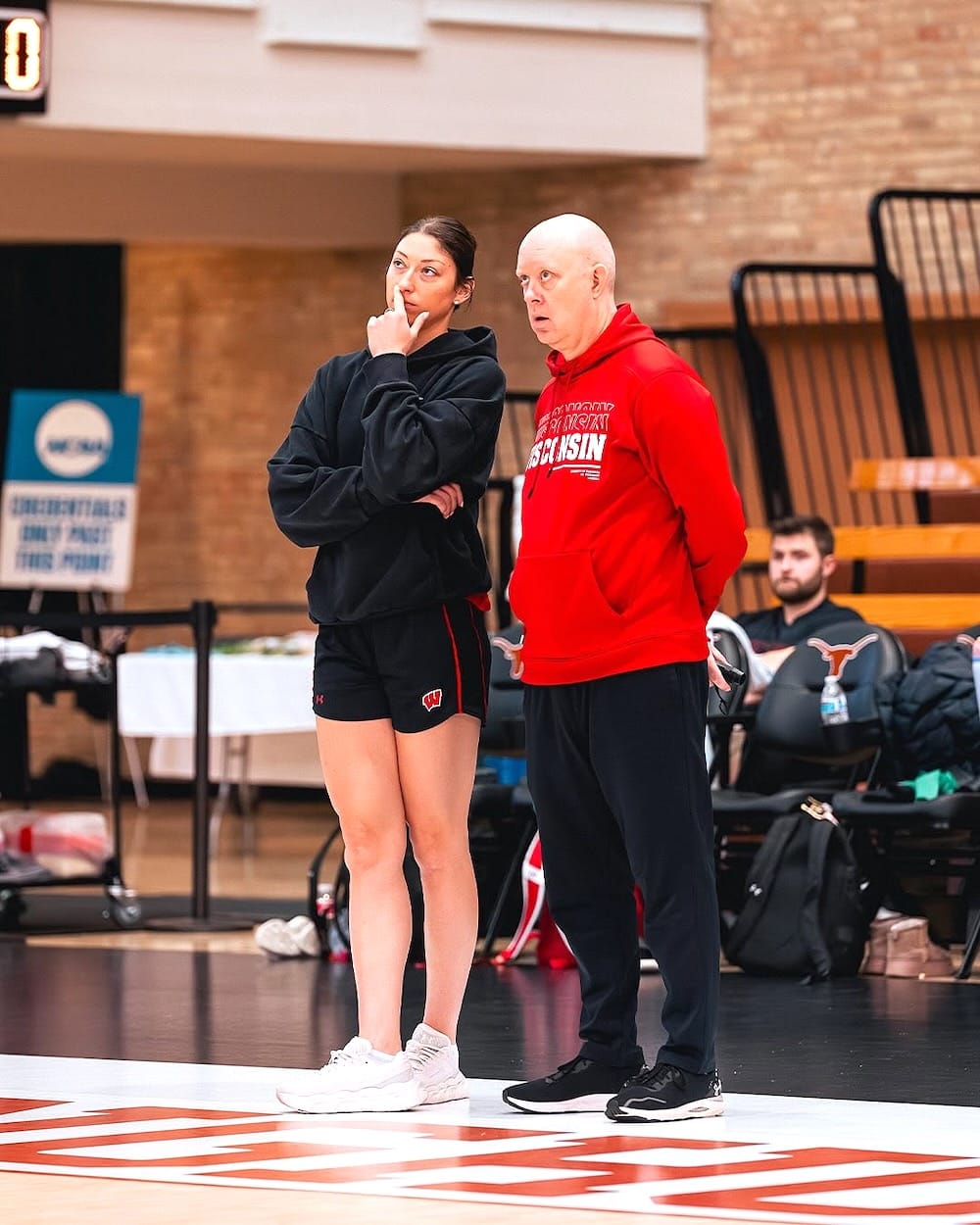
I'd say it's a bunch of people that we just enjoy being around. I don't know if they were trust hires, because I didn't know any of them when I first hired them, but they've just stayed on.
John Shondell is probably the one guy I've known for a while. I used to be his assistant coach back in high school, in the mid nineties, early to mid nineties. We graduated high school together. We've known each other since we were probably twelve or thirteen. He went on to coach at Purdue for twenty years, and we brought him over here after he coached one year of pro volleyball here in the US. So he was the one guy I knew beforehand.
But what we're doing is probably changing quite a bit, and that's probably one of the points you're trying to get at. Gary White was a volunteer assistant, then an assistant coach for us, and now he's our general manager. The thought of a college team needing a GM a few years ago was almost laughable. But the business of players, the contracts and payment, somebody communicating with agents, the multi year planning of the pot of money you have, it's just different now. It didn't exist a few years ago. So we really needed that role, and we transitioned him from a coaching role into a GM role.
Matias: That should be my job somewhere, damn it. I would really love that. You know a lot of people, you know volleyball, and then you think you know money too. You always think you know money better than money knows you. 😄
Kelly: You know, that was my dream job when I was a kid, to be the general manager of the Cincinnati Reds, back in the day. So yeah, Gary has my childhood dream job, except it being a volleyball program. 😄
Matias: It's all fun and games until you actually have to do the job. And you're in this transfer market situation, and calls go off from morning until evening, and it's all highly emotional.
Matias: What we talked about before, and the more typical VolleyBrains question, the game prep question. Maybe just walk us through it. How has preparing for a game changed over the last couple of years?
Kelly: The amount of information we have now is just insane. I get a stat package that's probably fourteen pages after every match. In our practice gym, I think we've got eight different cameras, and three or four TVs around that we can put any camera on. We download every practice, and our players comment after every practice. Every practice, our players and coaches are communicating that way over film.
Getting players comfortable with film, and the strength of learning behind it, beyond just a highlight video, has been something we're constantly trying to teach and get more efficient at. I'd say what we changed was probably around 2019.
We used to give people a scouting report with everything on it, and go in and say, here's the clips, we're going to watch this, watch this, watch this. Players would have those one or two sheets memorized during a match. And one of the things with that particular team was, if something went different in the match, they had trouble adjusting. They went in with a plan, they knew what that was, and they had trouble adjusting perspective in the moment.