119. Dan Lewis: Steal time from the team, and you give it back.
The second half of a four-hour conversation with one of Canadian volleyball's most respected coaches: how he builds a team, what he asks of his players, and the lessons that carried him from the back row to the head coach's chair. Part two of two.
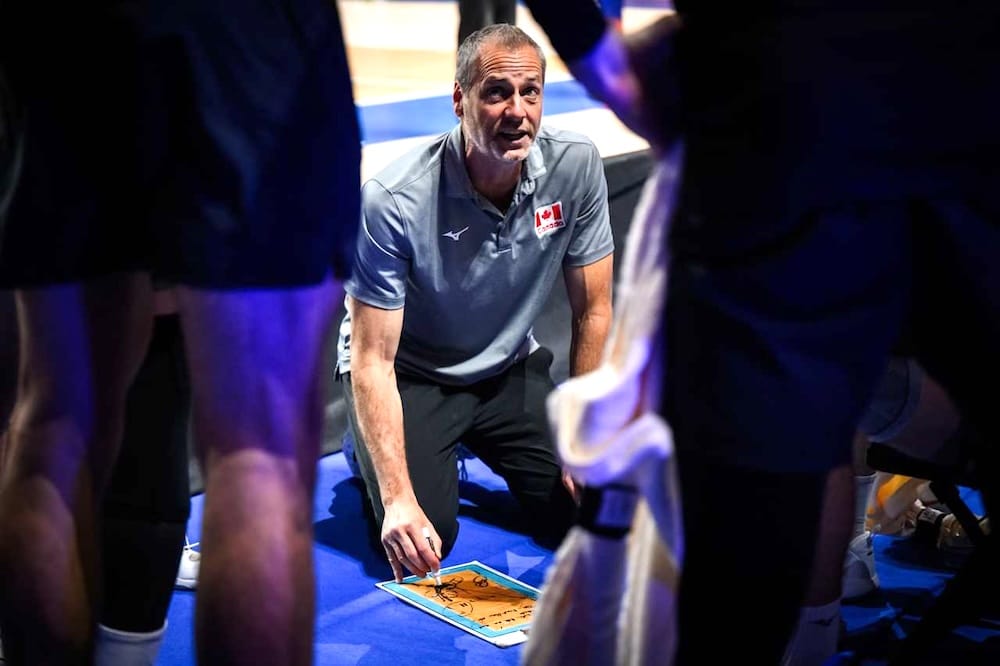
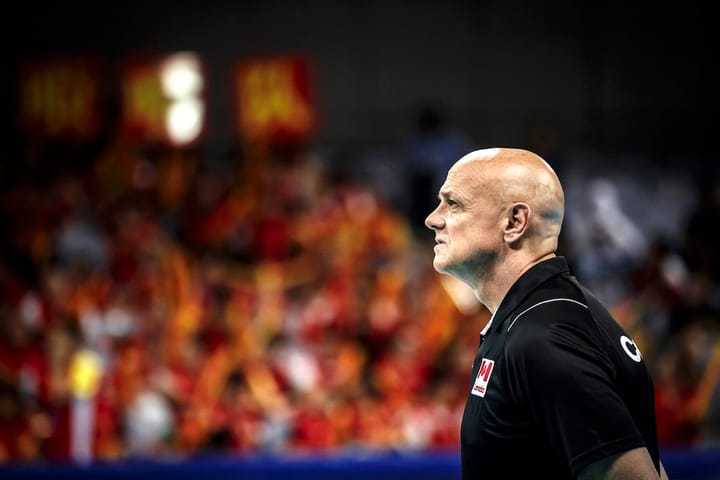
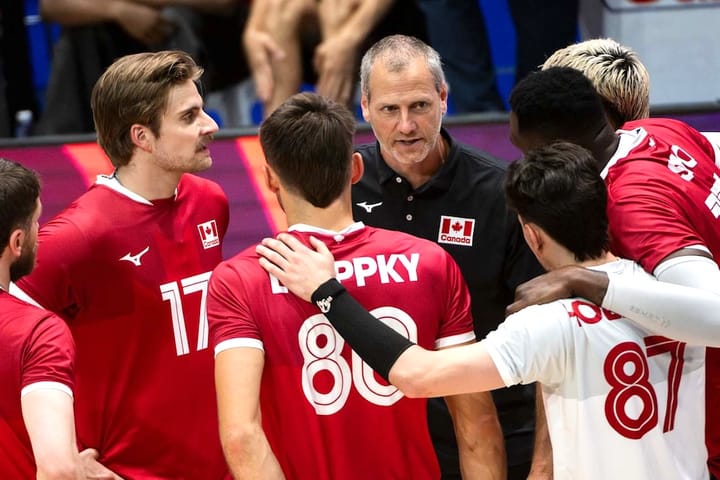
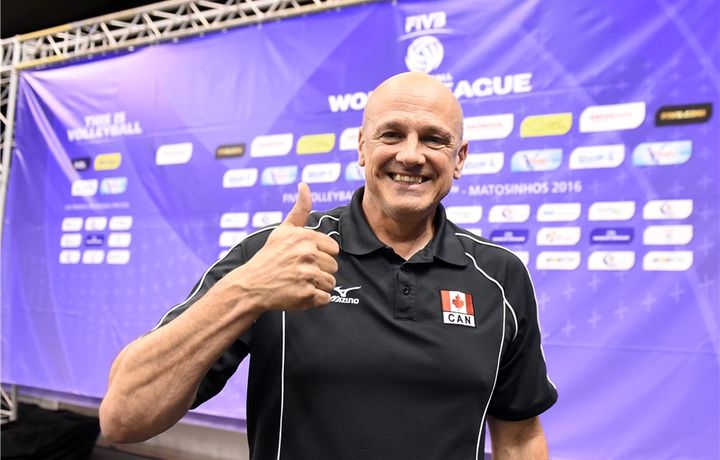
Dan Lewis is a Canadian volleyball coach whose path runs through nearly every level of the sport, from national team libero to head coach of Stade Poitevin Poitiers and, since January 2025, Canada's senior men's national team.
He spent more than 15 years as libero for Canada, played professionally in Switzerland, France, Poland and Slovenia, was an assistant coach at the Tokyo Olympics, and in July 2023 led Canada's Next Gen program to the country's first-ever gold at the NORCECA Men's Pan American Cup.
In part one, we covered his playing career, the mentors who shaped him, and how he made the move into coaching full-time. This second half picks up where that conversation left off.
If you haven't read it yet, start with part one, but this one stands on its own too.
 VolleyBrains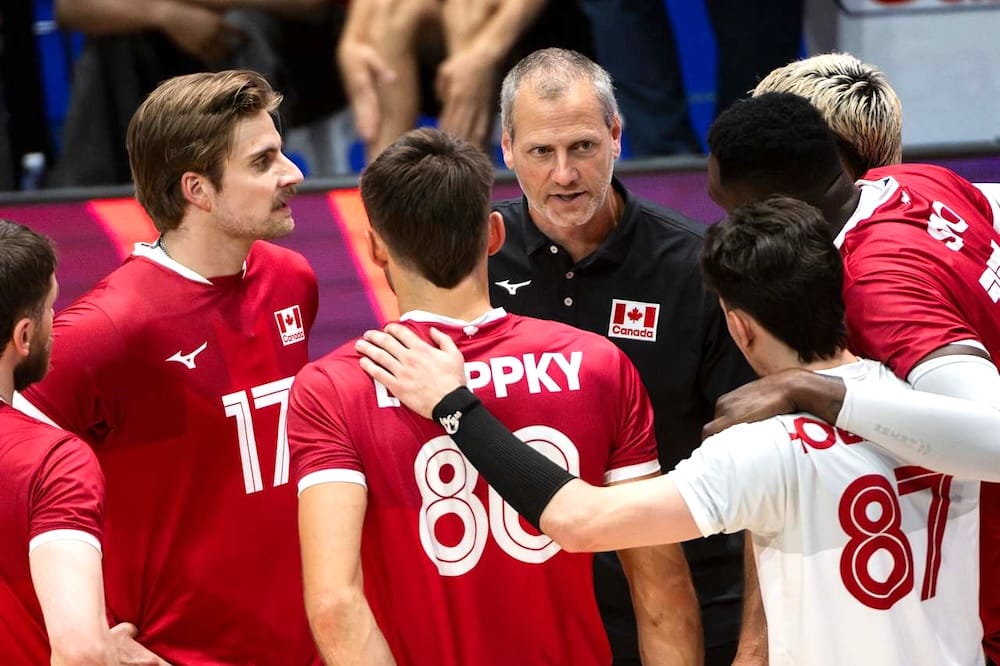
This second part explores:
- Why he doesn't believe in fines, and how the "wheel of misfortune" turned discipline into something the team enforces itself
- Hard work, discipline, enthusiasm: the core principles he won't compromise on, and why daily motivation isn't his job
- How he builds a weekly game plan, from Glenn Hoag's pen and paper matrices to classifying attackers into patterns he already has systems for
- The single best question to start any block defense preparation, given to him by Stéphane Antiga
- Why innovation in volleyball always arrives out of necessity, and how ten finger reception created the hybrid serve and the modern push
- The rule change he'd love to see, and why the block out should stay playable on the opponent's side
- Building the Frankenstein player: vision, long levers, coachability, and the one thing he tests before anything else
- How fencing, wrestling and tennis are great for reception, and how he coaches it as physics
- The billboard message he'd put in front of every player and coach in the world: structural tolerance, and what ignoring it actually costs
We have 59 minutes of transcribed interview with coach Lewis in this article. Enjoy!
Enter Dan...
Matias: Team rules. Are there fixed rules you put in place, both technical and organisational?
Dan: I have a model in my mind, and it's like, if you steal time from the team, you're going to have to give it back, and it's going to be physical. So I'm still old school. I just love making sure everybody understands that they're going to have to give time back if they took time from the team. And that gets ironed out real early.
You have to be careful, because it's not like pit drills, where you're just kicking the crap out of everybody. It's not really like that. It's more of an emotional thing. You've got to emotionally connect a drill to the fault. And I do that by not being able to breathe. Not physically hurting, but lack of breath. Being out of breath is a terrible feeling.
Matias: I think you need to give an example here, because this is going to come off really weird in the video. 😄
Dan: Yeah, so what I do is just a coach one on one defense drill if they're late, or if it's a standard kind of penalty.
I call it back to back, because I play the Drake song "Back to Back." It starts, and it's like, oh no, not again, you know. It does such a good job. So I'll play this song, it's about three minutes, and I just go through the process of a one on one. It was funny, because it's a technique my coach at university, Garth Pischke, used. It was one of the best things I borrowed from him.


Anyway, I had a lot of that at university. My first year, I was doing it a lot. I made a lot of mistakes. But in the end, you start to understand it. It's like, yeah, I made a mistake, I need to pay for that mistake. There's a really clear understanding, and it's just you and you alone.
I get the guys involved with making sure it's safe, with the water and the balls coming in, everybody working together.
And at the end I go and give the player a big hug and say, thanks man, that was really good, you're pushing hard for the team. Just to positively reinforce that you made up for it.
You made the mistake, and normally it's for being late or something. I don't necessarily like fines, because some guys make enough money that it's like a speeding ticket. For a super rich person, they don't care about a speeding ticket. But if I get one on the highway, I'm like, damn, you know. The effect is completely different for two people.
But that three minutes of back to back, nobody hides.
I love that about it, and in that sense, I guess I'm old school. But the reality is, you just have to have clear standards, beyond time.
I talk about my core principles of hard work, discipline, enthusiasm. I don't want to motivate you so much. I'll help, no problem.
But if I have to motivate you daily to play, you are in the wrong environment. If you can't be enthusiastic about training, you've got a fundamental problem with what you're doing.
So in that sense, that's a core value for me. I express these things, and I try to make a quick leadership group based around the captain, but supportive of the captain, to get the team to self enforce. Self enforcing is the best.
This year I had a great culture team, even though we had to manage some tricky individuals. Or tricky scenarios about individuals, not necessarily the individual itself. So navigating those is always best if the team is taking care of themselves.
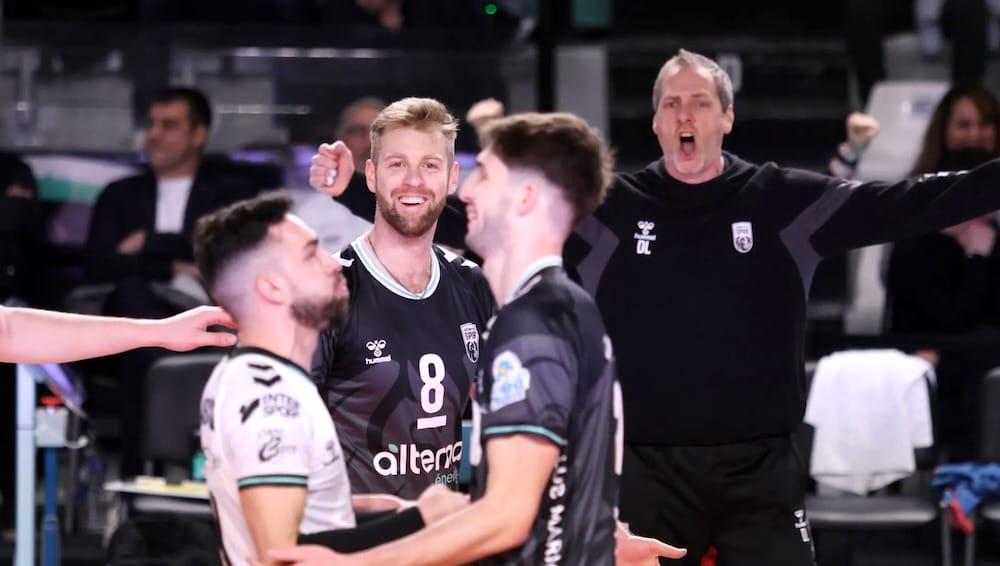
Then there was another fun one that I don't know where it came from, but we borrowed it last year, which was spinning a wheel with the penalty on it. So instead of a fine, it ended up being, okay, you're going to do your back to back, and you've got to spin the wheel of misfortune. And it's like, you've got to do this. It might be a minor physical penalty, or take some time, or just something annoying, or cleanliness, or you've got to buy a beer, whatever it is.
I said, okay guys, but you've got to have one space that's free, so that there's always a chance you can just do the back to back.
So that's been great. You kind of make it fun, while making sure the culture is taking care of itself. And of course, when the guy spins the wheel, everybody's just loving it. 😄
Matias: When you're preparing for the next game, how does your general approach look? And has your approach changed over the years?
Dan: Again, I am probably one of the luckiest coaches in the world, that I worked with Glenn, was mentored by Glenn, and just got to observe him prepare.
 VolleyBrains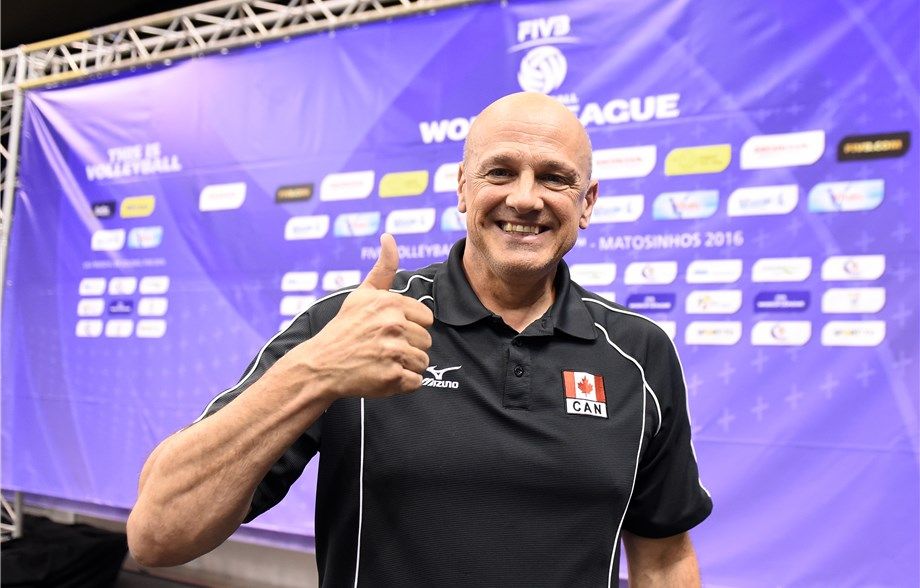
And then after years and years of that, being the assistant to Antiga. I can't express enough gratitude, orally and emotionally, for how lucky I was to have these guys as the people I'm studying with and preparing with, showing me their methods, letting me look behind the curtain.
Because this is one thing that I think is a massive advantage for some coaches.
And now I'm starting to realize that, okay, that's a massive advantage if you're putting in the time and you've got an organized way of doing something. But it's the delivery now, and the retention factor, that is even more important than what you're doing.
So I'm slowly migrating towards, are there systems in place currently that match an opponent?
The first thing I do with the preparation is look at all the offense of the opposing team and see if it's inside or outside of our current block defense capacities.
Because I can then start to classify guys. I have nicknames for guys now. This guy's a classic, this guy's a double angle, this guy's power and dump, whatever it may be. But not too many, right, because you don't want too many different patterns that they have to recognize.
So the classic attacker is side out, hard driven cross with a drop. We have a system already that plays that guy. Well, game plan done for this guy. Imagine that, already, without even doing anything. So I love that.
When we play a group of classics, my God, I'm in heaven. Backing up, setter plays to four, classic setter, zone two, love it. Middle blocker don't follow, left side stay in. Some of these systems for game planning are just based on classic systems that guys already play.
The problem is that the higher level you get to, the more complicated it gets, because guys simply don't have as many tendencies. So in the end, all of my preparation, from historically learning, becomes a lot about block defense.
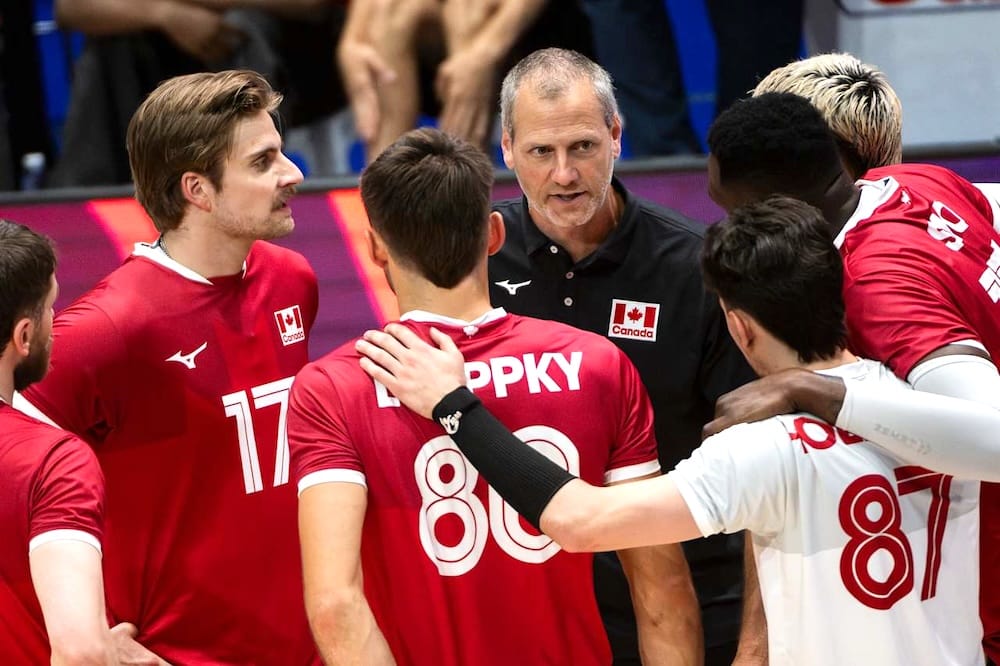
And now I'm starting to realize, okay, that's not enough. This year was my year of expanding into offense more, and how to tactically attack other teams. I levelled up massively this season with that. And now I've created another structure to apply, to see how the opponents defend well against a certain type of attack. So now I'm looking at this and trying to create scout spreadsheets that immediately give us information based on that.
I'm diversifying, growing in that, but my core game preparation has always evolved out of block defense.
I established that quickly by the end of last year, because it's so much work, what Glenn would do.
He would do it individually. This is 25, 30 years ago. He literally has a massive matrix of in system distribution per rotation. Literally with pen and paper, six rotational sheets, reception here, quality in this location, watching all of it like this. And I'm like, that's incredible. I'm watching it, watching, watching, and I'm like, whoa. Can I do that? Because I don't mind game planning, I like it, but to do what he does for each game...
But I just adapted it to the current needs I had. So I took his matrix, which was the most important part for me out of his system, and I printed out the matrix and cut all the video by rotation.
He could do his by game, old school, because he existed before Data Volley existed, right? His system was just dialed in. Then I saw Stéphane (Antiga) working by rotation, cutting everything, double plus plus, leaving exclamative out. Because simply, more or less, you're into a classic block defense versus exclamative. Although after talking to another coach who really helped me out, he said, well, it's not enough. You've got to know if you're going to follow or not on exclamative.
And I was like, oh, I didn't even think about that until he told me.
So I'm picking all these pieces together. The system, now becomes inside or outside of our current system. That's the first question. And then there are some kind of basic block defense patterns that you see everybody use. Like now the left side is way inside, which never really happened before.
And this is strategically interesting, because that left side blocker is now so efficient at stepping in and coming back to the middle, or getting to their guy. They're moving as efficiently, if not faster, than middle blockers.
And then the middle blocker patterning completely changed in system as soon as Seyed from Iran came along. Seyed just blew open the mechanical functioning of block defense for the middle. Because I remember Antiga saying that he would have a game plan where you're not allowed to spike in the direction of Seyed. And I was like, what? He was like, yeah. When we played Iran, it was forbidden to spike cross court if he was in the front row. And I was like, what do you mean? And he said, no, I'll just sub you out if you spike cross court, because you don't score. His movement was so efficient.
I couldn't believe he'd say this and mean it. So I went back and started watching Seyed block, and I was like, this guy's movement is completely different. Because I grew up with read block only, right? You do that, and then eventually you do your split and you go. And originally it was just, you'd stay still, and it's so slow to stay still. You can't load anything.
So all of this, the way I would game plan, was all through block defense. And then I start to expand out and realize, okay, well there's no way I can do the old classic system. So I'm cutting the most important pieces. Then I realize I'm still killing myself. And I'm still not even getting to offense enough.
So I'm like, all right, I need to pattern these. I started to create the patterns. This guy's this, this guy's this. So it's in or out of our system.
That's why the organization of your own system is so important. You want to have a system that catches a lot right away.
And you can see it kind of standardizing now in the new age.
Okay, I'll give you this one gem that Steph gave me. I remember writing it out. The first thing you've got to do when you're prepping against a team for block defense is, what can you dig? That's the first question you have to ask yourself. What can you dig? Because if you can dig something and you don't need a blocker there, well hallelujah, you've just saved a lot of work.
I mean, that's why digging hard driven is so important. If you don't have that, you're at a real big disadvantage, because you just have to try to block and touch everything.
But if you have a certain spike, versus a certain player, in a certain zone, that you can dig a lot and the majority of the time, this is where you start. What can we dig?
And then, what can you catch? Catch is where you don't actually go to block it, you go to catch it, just to get the block positive, which you can then transition. That's the next step. So then you don't have to pay as much attention there.
And then it's, okay, who's got the shoulder, where if you don't touch this, you're dead. That becomes that kind of pattern.
And then, I finally got to, at the end of Next Gen when I was coaching, like four years ago, I finally got to give information to the setter before the game. I didn't even do it before. It was like, we have our offense, our setter's going to run our offense, that's how it's going to be.
But then I was like, okay, let's just look at the other opponent's blocking. What are they doing in double plus plus in certain situations? And then you can kind of superimpose that on your team. This guy's a big middle spiker, this guy's committing with most other middle spikers, he's going to commit here likely, and he's committing early, he's not committing late, then he's committing at the end.
If you can see those, pick up those patterns, it's amazing. So then it's, okay, your offensive system, overload, separation, whatever it may be. How does the other team defend that? You've got to do that search. You've got to check that out, and then you can give your information.
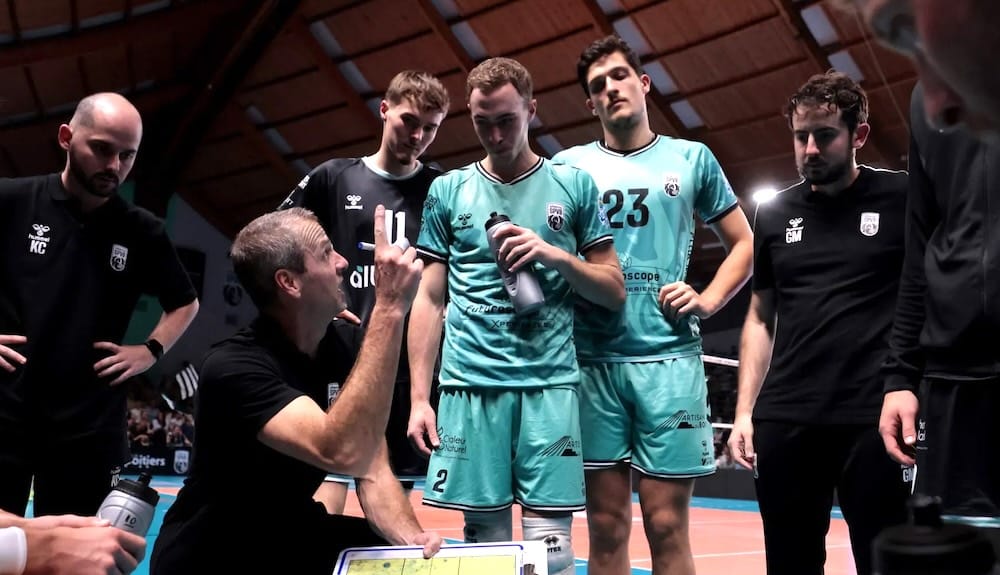
So as I'm doing the preparation, it becomes those pieces from the game planning, and then, okay, now I'm trying to spread it out. I don't do one big meeting anymore, I try to spread it out.
I go immediately at hitter direction, because if you have nothing but you have hitter direction, you've got something. So I start with hitter direction, and like I said, inside or outside our system. And then it's always opposite. In France, what I'm always doing is opposite, the two left sides, directions first, and then against our capacity to stop something.
A guy can have... if we have a certain matchup, we're not even going to block it if we try, because maybe we have a weakness. So then we've got to reinforce that with defense.
And that's what I'm really looking for with my own team, just any straight lines. Do we have a bad block or a bad defender? Because if a guy spikes there, you're dead. You can't have a non blocker and a bad defender in a line that somebody else has a strong attack on, or you just lose immediately.
So I'm making sure we don't have any of these lines. And then extra work would be, okay, if I get to it eventually, I do a tactical information give, where it's like, if you commit on this middle, he'll always for example, if you're going to commit, you commit to this side, but if you're late in reading, he'll hit this way. So I've studied the guy enough, in his attack, that in this situation he has a tendency.
So if you can find these tendencies, and if you can classify these tendencies quickly, and you already have blocking systems for them, wow, it makes your life easier.
But I would say it takes a lot of time to do that. So you've got to figure out what corners you can cut, and then, how do you deliver it?
So now, as we prepare for matches, I'll hit the opposite early on a Wednesday. I'll show the guys after training, hey, first look at opposite. Hirsch was easy to do for the final, but we had trouble stopping him anyway the first night. He was short side cross court, side out, two angles. So seal the line, middle leave the gap, doesn't hit the six, high ball, dead centre. It was automatic, but you still have to stop him.
You can give your guys that information.
But then there are certain guys on your team who, even though they have that information, aren't mechanically capable of doing it. So then it becomes matchup oriented. But that's almost secondary or tertiary scenarios where you just might not have that time.
And if you're at two games a week, good luck. You'd better have some systems in place.
Matias: The future of volleyball, from a technical point of view. How do you think the game will evolve, or what would you hope it looks like in a couple of decades? And what's needed to get there?
Dan: Well, I don't think about this question so much. A lot of people speculate, especially now, because of all the crazy rule changes we've had in the last five years or so.
Let's just face it. The first, best, greatest thing that ever happened to volleyball was the video challenge for touches and in and out. What a change to the game, and for the better. Also probably the rally point scoring. Maybe for the diehard old school volleyball guys it's not, and maybe on the beach they don't like it.
But the reality is, for the indoor game, I think for the fans to understand and follow it, and just for the ease of introduction and learning, and also probably to keep the scores a bit tighter, rally point helps a lot. It makes it way more exciting. So I'm really happy about those two changes.
There are a few things they have to understand when they're changing rules. The unintended consequences, and then not dampening the possibility of innovation by the players.
I played for a while before the libero, and before they brought the libero in, middles were receiving. And when they created the libero rule, they just destroyed the value of the middle internationally, in the sense that their stock went way down, because all of a sudden they don't receive. They probably could have projected that effect. And then it just raised their size up.