118. Dan Lewis: The quickest way to get better is to get organized
A four hour, wide ranging conversation with one of Canadian volleyball's most respected coaches: the mentors who shaped him, the frameworks he's built for developing athletes, and the honest story of what it actually took to reach the highest level. Part one of two.
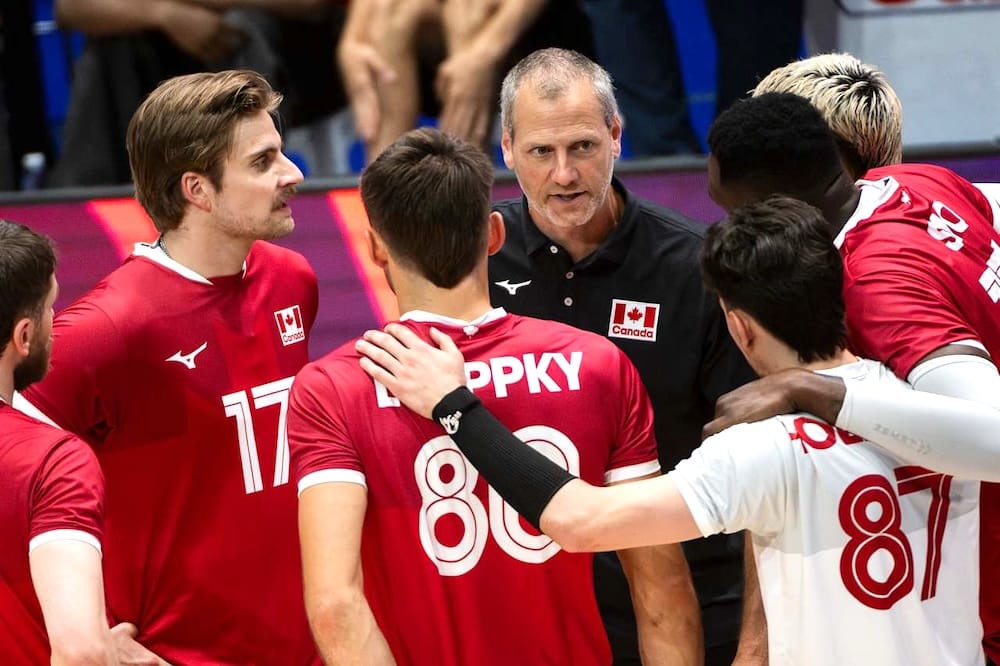
Dan Lewis is a Canadian volleyball coach whose path runs through nearly every level of the sport, from national team libero to head coach of a professional club and the Canadian men's senior national program.
In July 2023, Lewis, then head coach of Canada's Next Gen program, led Team Canada to its first-ever gold medal at the NORCECA Men's Pan American Cup, one of only two times in history Canada has won that title. Before stepping into coaching, Lewis spent more than 15 years as libero for Canada's national team, competing professionally in top European leagues across Switzerland, France, Poland, and Slovenia, and serving as an assistant coach for Canada's men's team at the Tokyo Olympics.
He retired as a player in 2016 and moved into coaching full-time, eventually taking over as head coach of the French professional club Stade Poitevin Poitiers in January 2024 and being named head coach of Canada's senior men's national team just over a year later, in January 2025.
We sat down with Dan in May, right after the season in France had wrapped up, for a long, wide-ranging conversation that covered his entire journey: the mentors who shaped him, the frameworks he's built for coaching and training, and his own evolution as a coach.
It's the kind of conversation that goes everywhere (which we love), and we're splitting it into two articles, each one manageable to get through in one sitting.
This first part explores:
- Why fatherhood was the moment that reshaped his entire focus
- The airport meeting and tryout story with Glenn Hoag: "I can help this team"
- Why he believes coaching is one of the loneliest jobs in sport
- How an economics degree led him to build his frameworks for balancing repetition and game-like variability in training
- Why "my way or the highway" coaching fails, and what co-creating with players actually looks like
- The training principle from his mentor that explains why some technical fixes stick and others don't
- Why organization is the fastest lever for improving any team
- The "booster rocket" mindset: why his real motivation was never the Olympics itself
- The unlikely goal he still has at 50, and why chasing "the process" matters more than the result
We have 55 minutes of transcribed interview with coach Lewis in this article. Enjoy!
Enter Dan...
Matias: Can you walk me through some of the key turning points in your journey, from playing to becoming a coach, to where you are today?
Dan: There are a few things that come to mind right now. One I've got to remember to tell you about was a meeting I had with Glenn Hoag at an airport.
 VolleyBrains
But the first thing is, I was getting older, and when William, my first son, arrived, and Jessica, my wife, gave birth, all of a sudden everything just got laser focused. Maybe this happens to a lot of people. I had this massive new responsibility, and it was like, okay, I was able to just wipe out like 98 percent of the garbage in my life, boom, windshield wiper, it's gone.
I was just dialed in and focused. It's incredible how much free time you have when you filter out all the garbage.
So I started to study, taking business courses and stuff like that, and it was okay, but it wasn't super exciting. It wasn't massively engaging. I was never really one for school anyway. Like I said, I'm more of a "do" person than a "study the plan and then go" person, which obviously has changed a little. But so there was that.
I've always loved looking at real estate. I don't know, I think a lot of people do, but I love it. I've lived in so many places, good and bad. When I was young, I just wanted to build a cottage or chalet in Canada. That was my number one goal, even above volleyball. All the money I made, which wasn't a lot, just went into that, and I got lucky because I was able to find some land in different places, cheap, and I started building.
When I was training on the national team in 2002 and 2003, I was building my cottage on the weekends. I'd get in trouble for it too, because I was pretty tired when I trained. But it was just another love I had. I wanted to be an architect when I was a kid, but I didn't draw much. I was good at math, and science was okay, but math in particular I liked.
So I got some guidance counselor advice in high school to go into engineering instead of architecture. What I should have done is stick with my love for architecture and just start drawing. I probably would have been more inclined to actually be studious. So I went into engineering, just because I was good at math, not because I liked it.
And I hit a wall, because I already knew most of my first year math from high school, and it just wasn't for me. By the end of the year I was like, no, this is not for me. So I switched into a general arts program in economics, which was interesting, but also about half garbage. Anyway, that's my studies.
But I loved volleyball. I was playing it and loving it, and I just kept going to the next level, next level, next level.
When I was finishing high school, at 18 years old, I didn't even know you could play pro. It wasn't something I was familiar with.
I went into university and had really big success in my first year, as just a loose cannon, but successful. And then I realized, my God, you mean I can... I can try out for the national team? What do you mean, pro? Where do you play pro? What's pro? Oh. So between my first and second year, I realized I could become a professional.
So then I just decided, okay, I'll be a volleyball player, and I went after it. It took a while to get organized, with a few injuries here and there, because I was never really well balanced. It was an all or nothing kind of thing.
As I started to play more, I had a moment in my life around 27 or 28 where it was like, okay, things are not working out well in pro. I was in Montpellier at the time, playing pro, and I was descending in quality as a human, not just quality of volleyball. And at that moment, I realized that, and I'd already separated from the national team before that, because I just wasn't able to have the type of relationships with certain people involved that you needed to have at that level. Partially my fault, probably partially theirs.
But anyway, then Glenn took over the team, I knew a lot about Glenn from the pro side. And I knew he wouldn't touch me at that time for pro with a 10 foot pole, because he just knew better.
And then I said, okay Dan, you have a chance here to smarten up, basically being drawn to him as a mentor without really knowing it. So I decided, okay, I'm going to try out again, because Glenn was good, he would set up open trials and give everybody a chance. I showed up and Glenn Hoag takes me to the side, we go sit in a cafe, and he's like, why are you here?
And I said, I can help this team. It just flew off my tongue. That was exactly what he wanted to hear. I didn't know what he was going to say or ask me. I figured it was probably going to be something about the past, but it wasn't. It was just, why are you here? And I said, I can help this team. And he's like, okay. He just made his own opinion of me through working with me, not through anything before.
So that was a major moment. At that point, it was either going to be, okay, I'm going into the working world, or I'm staying in volleyball.
And then having Glenn all of a sudden as a mentor for like 15 years, both as a player and as a young coach, that changed everything.
And then eventually, I loved the game so much, everything about it, that I kept playing. The libero position came around and I was like, well, I can do this, I'm good at it, I can still help the team, I can still play pro even, which is difficult as a North American libero. So it just kept going. I ended up playing until I was 40. And all of a sudden it's like, all right, well, yeah, I can get into the world of construction, landscape, all that stuff. I still like that. Maybe I can go start work and find excitement in the real world.
But there was also a unique moment when there was an assistant coach position open at the National Excellence Program, the NEP, in Canada. Talking with Glenn about it, he was like, are you interested in this? And I said, let me think about it. It wasn't very long before I said, yeah, I think I'd like to coach.

Now, I always knew I would coach in some capacity, because I used to go and coach with Hernan Humana on the beach. I just wanted to stay connected, because I loved the beach when I was growing up too, and I didn't want to lose touch with that environment again. So I would go back and ask him if I could train a little whenever I had time, and I'd end up coaching a bit.
He always said, it's great that you're giving back. And I'm like, okay, if that's what you think, but I just love being here.
Then when I got injured, I was living in Vancouver at the time, and I was like, I need to connect with people. So even injured, with my knee, after surgery, I would take my crutches down to the beach and watch people play and train. And eventually I'd be like, hey, do you want me to help run your training?
And I ended up with a group of girls training there. I knew them, they were friends with my girlfriend. And that just exploded into this whole summer of these girls coming in. So we just went after it. Six is a good number to train, so I'd invite another crew in.
And I was like, man, this is amazing. They really enjoyed it and appreciated it. And it allowed me to stay connected to the things I love, being on the beach and playing ball. That was all before this moment with Glenn.
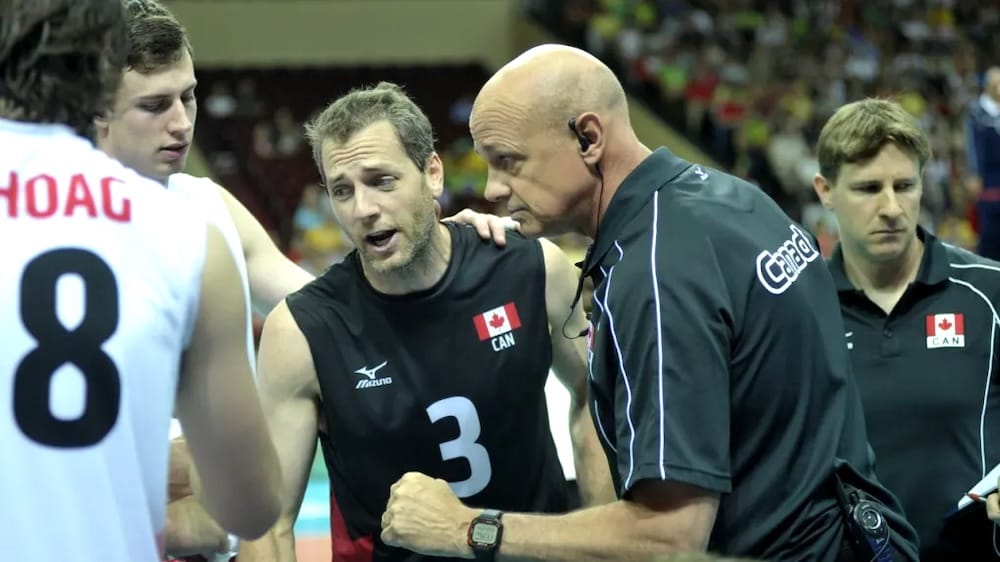
So, Glenn, we were traveling back from VNL at one point, and he just sat me down and said, okay, if you're going to do this, this is what you need to know. And he laid out a few things. He said, it's going to be way more planning than you think, and nobody's going to understand you. And I was just like, alright, I'm like, what do you mean, not understand me? He just had so much experience, and he could chisel it down to those two things. It's going to be an unbelievable amount of planning, and no one's going to understand you. And I'm like, yeah, that's pretty much it.
And then, in the end, he said, and if you don't like solving problems, don't coach.
So those three pieces alone ended up being my model. So when people don't understand me, I'm like, yep, Glenn said this would happen. Then it's just, keep solving problems, and eventually, if you plan enough and plan well enough, you're going to get to where you want to go, or at least have a chance.
He said no one's going to understand you, and it's going to be extremely lonely because of that. And that's kind of what I'm finding out now. That's why I think it's so important that coaches connect with each other, because we're all kind of in this competitive world as well. But man, there's got to be a better system for connecting coaches to support each other because of this.
So there are two things I really changed as I got older. One, I don't give shit to referees. I try not to, because it's such a difficult job, and we need them more than they need us. That changed how I interact with them, and also how I view coaches on other teams, compared to when I was a player. Yeah, they're my adversary, but they're also who I need to connect with, for quality of life, understanding, learning opportunities, things like that. And it's super important.
It's difficult, because as a coach you're just in this environment. Like here, I feel really lucky where I am in France at the moment, because I'm in a secure environment, with people where we trust each other in what we're doing.
But man, it is not safe being a coach. It's so easy to just get chopped, and there's nobody there protecting you at all. It's really something I've talked to one or two other coaches about, and it's been really on their minds as well.
Matias: This is for sure an occupation where there are more coaches than there are spots, so it's not that easy to find genuine connection with people because of this inherent 'lack of possibilities'.
Dan: Yeah, if I don't connect well with a coach, I don't blame them at all. I'm just like, I get it, this guy, or this man or woman, is under an incredible amount of stress. And if they don't want to talk, don't want to share anything, that's fine.
They're just on their own journey, and if it's not the right time to connect, then it isn't. But last year was almost comical to me. I was in my first year as a pro coach. I'd coached development for seven years, but development is so different from the competitive environment. And I just wasn't ready for the amount of anxiety.
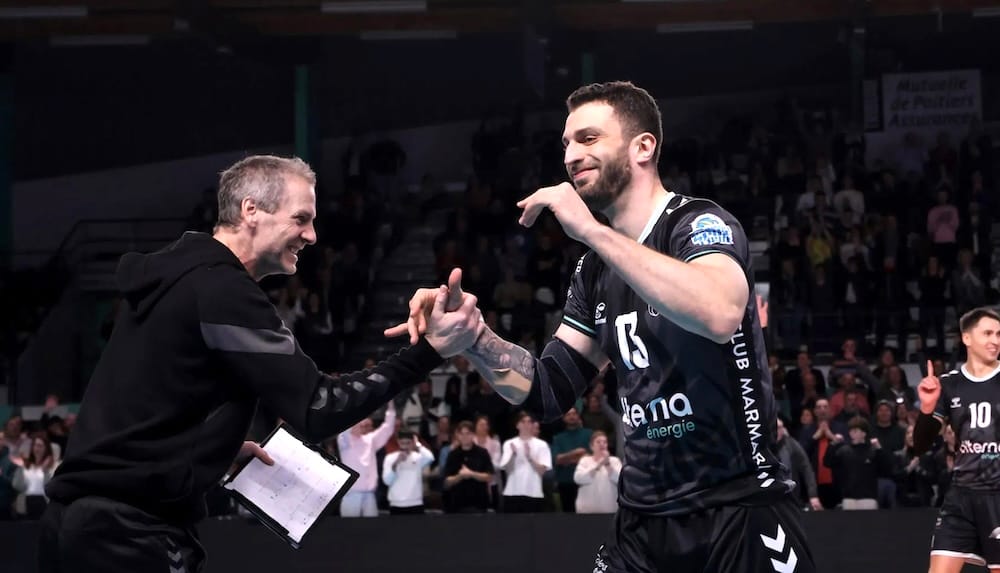
We talked about that little before, just the nervous system being turned on, and not being able to switch it off. I went around to pretty much every coach I went up against, and I was like, do you have these butterflies all the time? I do. I'd be like, hey, how are you doing, good luck tomorrow, but hey, can I ask you a question? And some of them were just like, whatever, and others were like, yeah, it kind of goes away after the season. And I was like, what? What do you mean, after?
It can't be like this the whole time. And it can, and it does. That's why I was talking about it before, having to build all that structure mentally, just to be able to manage it well. And then, eventually, at the end of the line, it's probably more about self acceptance than anything. We can unpack that if you want, later or whenever.
Matias: Maybe that's already the answer to the next question, but this one is always valuable. If I talk to somebody who's been coaching for decades, I'd ask, what advice would you give to yourself starting out. For you, this isn't that long ago. Would that be the advice you'd just give yourself, or would it be something else?
Dan: Yeah, I think it's perfect to just take what we're talking about. So originally, I was super lucky to have mentors and be in a competitive environment for a while, but as the assistant. Because the amount of pressure and stress on an assistant just isn't comparable to the head coach. I was working with Glenn as an assistant, and I was lucky to work with Antiga as an assistant too.
And then I just said, okay, if I really want to help these kids in this program, I need to get to the younger athletes and have earlier intervention with them. So, on the development side, the competitive sequences in those years and seasons are short, like one week, two weeks. And of course you have this incredible anxiety going on, and you need to manage that, but it's easier because it shuts off quickly after the event. And then, not understanding what it's like going from that environment straight into the competitive environment of professional coaching, or head coaching, say a national team, for a season of four months or so, however long it is.
Not being prepared for when that anxiety switches on and you've got to manage it 24/7, and not being prepared mentally for that. And luckily for me, I was willing enough to admit I was having problems, to my peers.
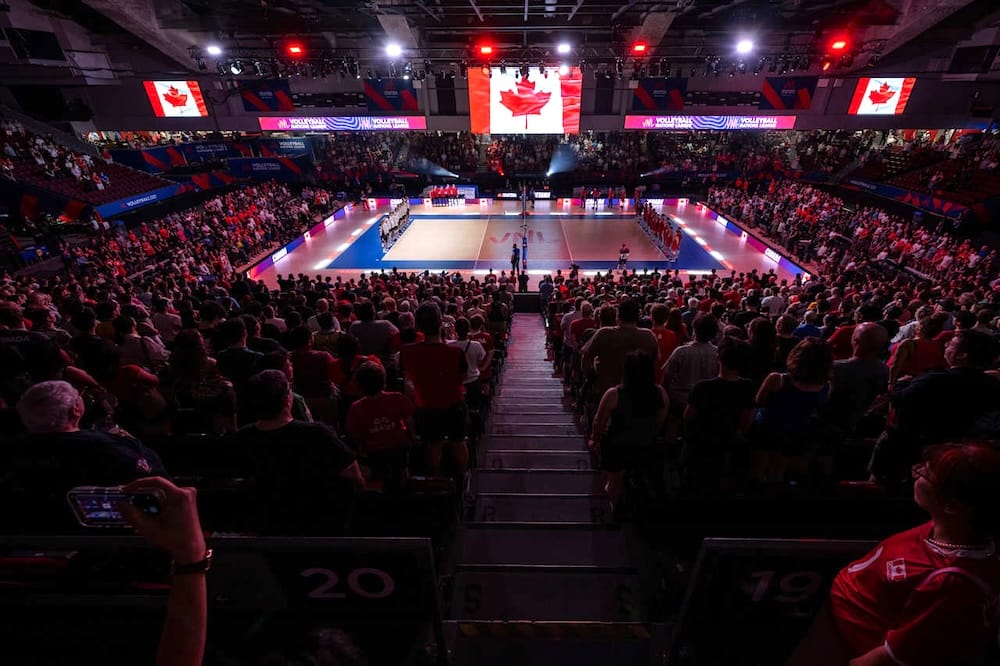
So like I said, I would just go up to all the coaches and say, hey, I've got this insane amount of anxiousness all the time, do you have that? I've got these butterflies, it never goes away. And a couple of the guys were extremely nice, and they'd be like, yeah, we have that as well. And they'd start talking about it, and I'm listening, looking for clues.
So that was amazing, first, just knowing I wasn't alone. Understanding that, okay, it's not just me, there are other people who feel that too. So that was good. It's still like, okay, I can figure this out. And then Robbie, who was at Cannes, I told him, I would go up to every single coach and say this and ask them for help. And they were all willing to help me. It was amazing, and I thanked them. I'm so grateful they would listen to me and share what they thought.
So, Robbie, he said, you need to talk to somebody about this. He really listened, and he was like, yeah, you need to talk to a professional. I was like, maybe he's right. So then I started unpacking that. And I think the advice I would have given myself (Glenn gave me a lot of that advice already, but I would have added, knowing myself a little more), just how anxious I am as a person anyway, it's just part of me, probably more than normal. It served me really well when I was competing, because I'd be freaking out, but as soon as the whistle blew, I was just dialed into that ball, and it all went away. But before the game, I'm butterflies like crazy. I was lucky that I could always sleep, but that's maybe a separate thing.
Anyway, I would just tell myself, don't just think that knowing volleyball, or being able to connect with people well, is enough. You're not prepared mentally for the amount of stress and anxiety you're about to face. You've got to go back, understand your nervous system, and study the mind a little more.